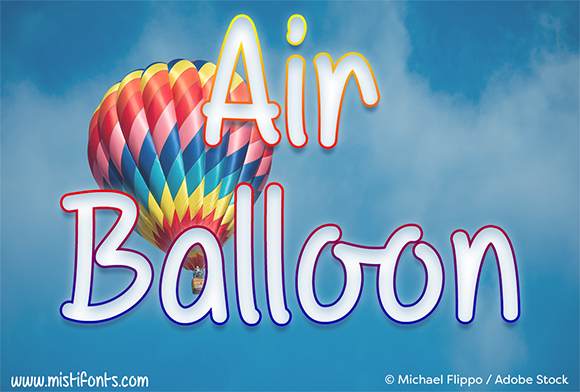
Air Balloon: A Handwritten Font That Brings Personality to Your Projects
In a world dominated by sleek sans-serifs and uniform typefaces, there’s something refreshingly human about a handwritten font. Air Balloon is exactly that kind of typeface—a cute, hand-drawn lettering style designed to infuse warmth, charm, and a personal touch into any project. Whether you're a professional designer, a small business owner, a hobbyist crafter, or a blogger looking to stand out, this font offers a versatile tool for creative expression.
Handwritten fonts have been gaining traction for years, not as a passing trend but as a genuine response to how we communicate visually. In an age of automation and digital impersonality, people crave authenticity. Air Balloon answers that craving. Its playful yet legible strokes make it suitable for a wide range of applications—from custom invitations and branding materials to social media graphics and educational resources. The relevance of such a font goes beyond aesthetics; it taps into a broader shift toward approachable, human-centered design.
Why Handwritten Fonts Like Air Balloon Matter Now
Think about the last time you received a hand-addressed envelope or a handwritten note. Unlike a printed label, it felt intentional, personal, and memorable. That emotional reaction is exactly what Air Balloon brings to digital and print design. Today’s audiences—especially adults aged 20 to 50—are bombarded with polished marketing messages. They’ve learned to tune out overly perfect visuals. A font with irregular edges and natural letter variations feels genuine and trustworthy.
This shift in user expectations has changed how creators approach their work. Freelancers and small business owners, for instance, no longer rely solely on corporate-looking templates. They want their brand to feel relatable and accessible. Air Balloon fits that need perfectly. Its handwritten quality softens the formality of text, making it ideal for product labels, thank-you cards, or even website headings. The font conveys care without being overly decorative.
From a practical standpoint, the rise of home-based businesses and digital product marketplaces has fueled demand for such fonts. Crafters designing printable wall art, planners, or stationery appreciate how Air Balloon adds character without overwhelming the layout. Similarly, educators creating worksheets or classroom decorations find that a warm, child-friendly typeface encourages engagement. The font’s rounded, bouncy letters are easy on the eyes and work well at various sizes.
The Evolution of Type: From Functional to Emotional
Typography has come a long way from the days of metal blocks and mechanical consistency. For decades, the goal was readability above all else. But as design tools became more accessible, people started experimenting with expressive lettering. The early 2000s saw a burst of handwritten fonts, but many were rough or illegible. What separates Air Balloon is its balance of charm and clarity. It’s cute without being chaotic, personal without being messy.
The evolution of digital tools has also lowered the barrier for using such fonts. Where once you needed a graphic design degree to pair typefaces effectively, now a marketer can download Air Balloon and apply it to a social media post in minutes. That accessibility is key. It democratizes design, allowing non-creatives to produce work that looks intentionally crafted. The font has become a go-to for modern workflow needs—quick, effective, and visually appealing.
Moreover, the trend toward “cottagecore” aesthetics, handmade products, and analog nostalgia has further boosted interest in handwritten typography. People are gravitating toward imperfection as a signal of authenticity. Air Balloon fits this ethos without being dated. It’s forward-looking in its simplicity, proving that a font can be both trendy and timeless.
Practical Implications for Creators and Professionals
Using Air Balloon isn’t just about choosing a pretty typeface—it’s about strategic communication. For bloggers and content creators, a handwritten font in headers or captions can make a site feel more personal, encouraging readers to stay longer. For example, a lifestyle blogger might use Air Balloon for pull quotes or section titles, contrasting it with a clean sans-serif for body text. That contrast creates visual hierarchy while preserving warmth.
Business owners, especially those in creative fields like wedding planning, children’s products, or handmade goods, can leverage the font to reinforce their brand story. A personalized wedding invitation set using Air Balloon immediately conveys a sense of intimacy that standard script fonts lack. Similarly, an entrepreneur selling organic skincare could use it on product labels to signal a homemade, artisanal quality. The font works hard without screaming for attention.
For educators and parents, Air Balloon is a practical tool for creating engaging materials. Flashcards, reward charts, or classroom posters become more inviting when the text feels handwritten. Children respond well to lettering that doesn’t look like a textbook. The font’s playful ascenders and descenders mimic the natural variability of handwriting, making it a preferred choice for early literacy resources.
Even marketers and advertisers have adopted handwritten fonts to soften brand communications. In email newsletters, a headline set in Air Balloon can break up dense copy and add a human touch. Of course, restraint is important—overusing any style can dilute its impact. But strategically placed, Air Balloon can improve click-through rates by making content feel approachable.
Realistic Examples of Air Balloon in Action
Consider a small boutique bakery designing a flyer for the holiday season. Using Air Balloon for the tagline “Fresh Baked with Love” instantly creates a cozy feel. The font pairs well with a rustic background image of cookies or bread. Similarly, a freelance illustrator creating a digital sticker set for bullet journals might use Air Balloon for the typography elements. The consistency of the lettering ensures all stickers look cohesive, even if drawn by hand later.
Another example: a nonprofit organization running a community fundraiser could use Air Balloon on social media posts to convey grassroots spirit. The informal nature of the font reduces the distance between the organization and its supporters. In contrast, a corporate report would be unsuitable—but that’s the point. Air Balloon isn’t for every context; it shines where personality matters most.
For DIY crafters, the font opens up new possibilities. Because of its clean yet playful form, it works well for digital cutting machines (like Cricut or Silhouette) for making vinyl decals, T-shirt designs, or scrapbooking titles. The letterforms are distinct enough to cut cleanly, yet detailed enough to retain character. This versatility is why many crafting enthusiasts keep Air Balloon in their top font picks.
Trends in Font Usage and Changing Creative Needs
The growing preference for handwritten fonts reflects larger lifestyle shifts. People are spending more time online, consuming content at speed, and craving moments of visual respite. A handwritten font functions as a visual pause—it signals that the message is not just information, but a gesture. This is especially relevant for social media, where scrolling can be mindless. A post header in Air Balloon might make someone stop, read, and react.
Another trend is the convergence of digital and physical design. Many creators design first on screens and then translate to print. Fonts like Air Balloon that maintain legibility across both formats are invaluable. Its stroke weight and spacing are optimized for screen rendering, yet it scales well for print on paper, fabric, or packaging. This dual usability aligns with modern workflows where boundaries between media are blurring.
User expectations have also evolved around customization. Today’s audience doesn’t want generic stock imagery—they want bespoke, or at least bespoke-feeling, design. Air Balloon provides that bespoke illusion affordably. A small business can’t always hire a calligrapher, but they can download the font and create a similar effect in minutes. This democratization of high-quality design is a positive development for entrepreneurs and hobbyists alike.
Finally, the emphasis on mental health and wellness has influenced design choices. Softer, warmer visuals are preferred over cold, rigid ones. Handwritten fonts contribute to a calming aesthetic, making them popular in wellness blogs, meditation apps, and nature-inspired branding. Air Balloon’s gentle curves and consistent baseline reduce visual stress, encouraging relaxed reading.
Recommendations for Getting the Most Out of Air Balloon
To use Air Balloon effectively, treat it as an accent rather than a workhorse. Pair it with a neutral sans-serif like Open Sans or Lato for body text. Limit its use to headers, subheads, or short phrases. Avoid setting large blocks of text in Air Balloon, as readability may decrease at small sizes. For crafting projects, test the font at different cut sizes before committing to a final design. The font’s charm is most apparent when used intentionally.
Color choice also matters. Air Balloon looks lovely in soft pastels, earthy tones, or classic black. It can also be reversed out—white on a dark background—for dramatic effect. Layering the font with illustrations or hand-drawn elements amplifies the handmade feel. For digital use, consider adding a subtle shadow or outline to help it stand out.
Keep in mind licensing. Many handwriting fonts come with different licenses for personal vs. commercial use. Ensure your intended application is covered. For small businesses, purchasing a commercial license is a worthwhile investment—it legitimizes your brand and avoids legal hassles later. Air Balloon is generally well-documented in this regard, so check the seller’s terms.
Ultimately, the best use of a font like Air Balloon is one that feels natural. Don’t force it into a design that calls for formality. Instead, let it enhance projects that value personality, warmth, and approachability. Whether you’re designing a wedding invitation, a classroom poster, or a social media campaign, Air Balloon offers a simple way to say “this was made with care.”