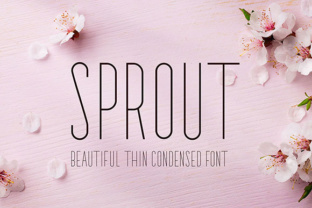
Sprout
Sprout is a thin, condensed sans-serif typeface designed with a delicate and feminine aesthetic in mind. Its slender letterforms and tight spacing create an airy, refined look that is particularly suited for wedding stationery, invitations, albums, and websites where a soft, elegant presence is desired. Unlike heavier or more neutral sans-serif fonts, Sprout carries a distinct personality: lightweight, airy, and evocative of modern romance.
This article provides a balanced evaluation of Sprout for designers, couples planning their wedding materials, and brand creators seeking a delicate sans-serif option. We will examine what makes Sprout appealing, where it excels, where its limitations may require alternative choices, and how to decide whether it aligns with your specific project goals.
Understanding Sprout: A Thin Condensed Sans Serif
Sprout belongs to a category of typefaces defined by very thin stroke weights and condensed proportions. Condensed fonts have narrower character widths than standard, allowing more text to fit in a given space while maintaining a vertical emphasis. Combined with an exceptionally thin weight, Sprout achieves a visual effect that feels both modern and delicate—almost like calligraphy rendered without serifs.
The design avoids sharp contrasts or dramatic curves; instead, it relies on consistent, gentle lines. This makes Sprout appear understated rather than bold. It is not a font that demands attention through weight or thick strokes but rather through its lightness and simplicity. For designers aiming for a minimal yet feminine style, Sprout offers a tool that can support that vision without overwhelming other visual elements.
Reasons for Interest in Sprout
Designers and couples often seek fonts that convey a specific emotional tone. Sprout appeals to those who want something:
- Elegant and refined – The thin strokes suggest delicacy and craftsmanship, which many associate with high-quality wedding materials.
- Feminine without being ornate – Unlike script fonts that can feel overly decorative, Sprout offers a clean, sans-serif structure with a gentle finish.
- Space-efficient – Because it is condensed, Sprout can fit longer names or phrases into tight layouts, such as save-the-date cards or website headers, without resorting to very small font sizes.
- Modern yet timeless – Its minimalistic design fits contemporary trends, but the absence of extreme stylistic flourishes means it may not date quickly.
These qualities make Sprout an attractive option for anyone creating wedding invitations, bridal shower materials, wedding websites, or even branding for businesses that want a soft, feminine image. However, the reasons for choosing a font should extend beyond initial appeal—practical performance matters just as much.
Benefits of Using Sprout in Wedding and Feminine Design
When used appropriately, Sprout can elevate a design by contributing a sense of calm and sophistication. Its thin strokes pair well with more substantial elements, such as bold headings or decorative illustrations, creating contrast that directs the viewer’s eye. For example, using Sprout for the body text of an invitation alongside a delicate script for the couple’s names can produce a balanced, layered typographic hierarchy.
Another benefit is its ability to maintain readability at moderate sizes in clean, uncluttered layouts. On high-quality paper or digital screens with sufficient resolution, Sprout remains clear. Its condensed nature also helps control line lengths, which can improve the overall proportion of a design.
From a branding perspective, Sprout can be used to establish a voice that is soft but not childish. For businesses in the wedding industry—florists, planners, stationers—adopting Sprout for a logo or website header can signal attention to detail and a modern feminine sensibility.
Tradeoffs and Practical Considerations
Every typeface has limitations, and Sprout is no exception. The most significant tradeoff involves legibility at small sizes or in low-contrast environments. Because the font is very thin, reducing its size to 10pt or below can make individual letters—especially lowercase “e,” “a,” and “s”—difficult to distinguish, particularly in print on textured paper or on screens with average resolution. This is a critical consideration for wedding materials that may include RSVP cards, directions, or fine print details. If the audience includes older guests or if the design will be viewed on mobile devices, alternative fonts for those sections may be necessary.
Condensed fonts also require careful tracking (letter spacing). If not adjusted, the tight letterforms can appear cramped, reducing readability. Designers should plan to increase tracking slightly when using Sprout for text blocks, which can partially offset the space-saving advantage.
Another tradeoff is aesthetic specificity. Sprout’s delicate femininity may not suit every wedding theme. For formal, traditional, or black-tie weddings, a more classic serif font (such as Baskerville or Garamond) might convey the desired level of formality better than a thin sans-serif. Similarly, outdoor rustic or boho weddings might call for warmer, hand-drawn styles rather than a precise and minimal typeface.
Additionally, because Sprout is very light, it can appear washed out when printed on bright white paper with thin ink coverage. Testing on the actual paper stock is essential before committing to a full print run.
When Sprout Is a Strong Fit
Sprout shines in designs where the overall aesthetic is clean, airy, and modern. It is an excellent choice for:
- Modern, minimalist weddings – If the wedding theme emphasizes simplicity, white space, and natural light, Sprout complements that atmosphere.
- Feminine or romantic branding – For products or services targeting a female audience with a delicate visual identity, Sprout can support that positioning without appearing cliché.
- Large-size headings – At 24pt or larger, Sprout’s thin elegance becomes more apparent, and legibility issues diminish.
- Digital invitations and websites – On high-resolution screens, the font renders sharply and contributes to a sophisticated user interface, provided it is not used for lengthy body paragraphs.
- Pairing with script or decorative fonts – Sprout’s neutrality allows more ornate fonts to take the spotlight while still providing structure.
When Alternatives May Be Worth Considering
There are scenarios where another typeface might serve the project better than Sprout. Consider alternatives if:
- Legibility is top priority – For small body text, programs, or reading-heavy materials, a font with heavier weight or larger x-height (e.g., Lato Light, Roboto Thin, or Open Sans Light) will be easier to read.
- The wedding is formal or traditional – Classic serifs or elegant scripts may convey the expected gravitas more effectively than a thin sans-serif.
- The design incorporates high-contrast backgrounds – Thin fonts can disappear on dark or patterned backgrounds unless reversed out with sufficient weight, and even then, they may not hold up.
- The client or brand wants a more gender-neutral or bold look – Sprout’s delicate character is decidedly feminine, which may not align with every project’s tone.
Fonts like Helvetica Thin, Futura Light, or Avenir Next Thin offer similar thin sans-serif aesthetics but with less condensed proportions, which can improve readability. If condensed is still desired but with more stroke weight, alternates such as Montserrat Thin or Poppins Thin provide a broader glyph set and better legibility at small sizes.
Practical Decision-Making Insights
To determine whether Sprout aligns with your project, evaluate the following factors:
- Who is the audience? If the majority are viewing the design on high-quality paper or high-resolution screens, Sprout’s thinness is less of a handicap. For audiences that include older individuals or those with visual impairments, prefer heavier fonts for key information.
- What is the primary medium? Sprout performs well in print with smooth paper stock (e.g., matte or uncoated) and in digital contexts where font rendering is good. Avoid it for large-scale signage or materials viewed from a distance.
- How will you pair it? Sprout works best as a secondary or accent font. Reserve it for smaller text blocks, captions, or details, and use a bolder companion font for headings or crucial data.
- Have you tested it? Always print a sample at actual size and on the intended paper. Check how the font reads in natural light and under typical viewing conditions. For websites, check mobile responsiveness.
- Will the design be used across multiple assets? Consistency matters. If Sprout is used only in one part of a wedding suite (e.g., the invitation) but not on the website or signage, the visual cohesion may suffer. Plan for a complementary typeface strategy.
Conclusion: Is Sprout Right for You?
Sprout is a distinctive thin condensed sans-serif that fills a specific niche: delicate, feminine, modern wedding and branding design. Its strengths lie in creating an elegant, space-efficient, and minimal aesthetic that can enhance materials when used with intention. However, its limitations in small sizes and low-contrast contexts mean it is not a one-size-fits-all solution.
For designers and couples who prioritize a light, refined look and are willing to manage the font’s constraints—through careful spacing, testing, and pairing—Sprout can be a beautiful asset. For those who need robust legibility, broader versatility, or a more traditional feel, exploring alternatives may lead to a better fit. As with any typeface, the best choice depends on how well it serves the message, the medium, and the people who will experience it.