BD RatterBit: Revisiting a Funky Pixel Font from Büro Destruct’s Early Free Library
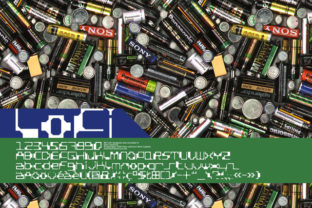
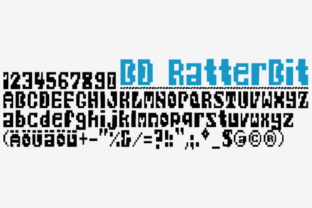
Designers who dig into the archives of digital typography occasionally stumble upon small treasures that feel both nostalgic and surprisingly fresh. One such gem is BD RatterBit, an early free font released by the Swiss design collective Büro Destruct. What makes it stand out is its unabashedly funky pixel style—a font that wears its low-resolution heritage like a badge of honour. At first glance, it might look like something from a retro video game or a 1990s cyber cafe flyer. But look closer, and you’ll see a carefully crafted typeface that continues to influence modern design trends, especially in areas where personality matters more than pristine vector smoothness.
BD RatterBit belongs to a period when Büro Destruct was experimenting with extreme forms and digital constraints. The “pixel” here isn’t just a blurry afterthought; it’s a deliberate choice to build each letter from visible square blocks. The result is a typeface that feels raw, playful, and slightly anarchic. For anyone working in creative fields—whether you’re a graphic designer, a blogger, a game developer, or a marketer trying to break away from sterile aesthetics—this font offers a way to inject energy and attitude into projects without spending a dime. And because it’s free, it has circulated widely, appearing in everything from underground zines to experimental website headers.
Why a Funky Pixel Font Matters in Today’s Design Landscape
You might wonder: why would a professional in 2025 care about a pixelated font from the early days of Büro Destruct? The answer lies in the growing demand for authenticity and distinctive visual voices. After years of clean, minimalist design—think corporate sans-serifs and flat UI—there’s a renewed appetite for imperfection, texture, and character. BD RatterBit delivers exactly that. Its blocky, uneven forms stand in contrast to the polish of modern vector fonts. It’s a tool for breaking the monotony of homogeneous branding.
Current trends in digital art and user interface design show a revival of pixel-based aesthetics. From chunky icons in mobile apps to retro-inspired game menus, the pixel has become a shorthand for simplicity, fun, and even a bit of rebellion against high-resolution photorealism. BD RatterBit fits perfectly into this movement. It’s not just a font for retro enthusiasts; it’s a practical option for anyone who wants their message to feel immediate, handmade, and slightly offbeat. Small businesses, especially those in creative or tech niches, use it to signal that they don’t take themselves too seriously—yet still have a sharp design eye.
Moreover, the font’s early free status means it has lived through decades of design evolution. It was created before the current wave of “brand guidelines” demanded 40 weights and obsessive kerning tables. BD RatterBit is what it is: a single bold pixel style that asks you to work with its limitations. That constraint can be liberating. When you can’t adjust every curve, you focus on composition, colour, and context.
The Evolution of Pixel Fonts and BD RatterBit’s Place in It
Pixel fonts emerged naturally from the technical restrictions of early computer displays. Monitors with 72 dpi, 8-bit colour, and limited memory forced designers to build letters out of small squares. As technology improved, most typography moved toward smooth outlines. But a subculture never abandoned the pixel. It became a design choice rather than a necessity.
Büro Destruct, founded in the 1990s, was at the forefront of embracing digital imperfections. Their early font releases—including BD RatterBit—were experiments in what type could be when you stopped trying to mimic traditional calligraphy or mechanical typesetting. The result was a collection of faces that felt more like music or noise than classic typography. BD RatterBit, with its wobbly, uneven pixel arrangement, echoes the aesthetic of early computer graphics and chiptune music. It’s a font that remembers the era of Winamp skins, Geocities pages, and pixel-art platformers.
Today, that same aesthetic has been repurposed by designers seeking a human touch in an increasingly automated world. The pixel’s visible grid reminds viewers that a human made each dot—a counterpoint to AI-generated designs that can feel too smooth. BD RatterBit’s particular charm is that it’s not strictly uniform. Some letters rise higher, others lean. It feels like a hand-painted sign done with square brushes. This kind of idiosyncrasy is exactly what many brands now crave to stand out on social media, email newsletters, and product packaging.
Practical Implications: How Creators and Professionals Can Use BD RatterBit
So how can you actually put BD RatterBit to work? The font works best in contexts where its pixel nature becomes a strength rather than a distraction. Here are a few practical scenarios:
- Headlines and banners – Use it for short, bold statements. The chunky letters grab attention, especially when sized large. Pair it with a clean sans-serif body font to create contrast.
- Retro-themed branding – Coffee shops, game studios, record labels, and indie app makers can adopt BD RatterBit for logos or accent text. It instantly communicates a playful, DIY spirit.
- Social media graphics – Platforms like Instagram and TikTok reward visuals that break the grid. BD RatterBit can make quote cards or announcement posts feel less corporate and more personal.
- Low-resolution screens – For small displays like smartwatches or embedded devices, pixel fonts often render more legibly than anti-aliased vector fonts. BD RatterBit can be a nostalgic yet functional choice for hobby projects.
- Educational or workshop materials – If you’re teaching design history or pixel art, this font doubles as an example of how early digital typography evolved.
One important note: because BD RatterBit is highly distinctive, avoid using it for long blocks of body text. Its pixel structure, while fun, can become tiresome to read at small sizes in paragraphs. Reserve it for short bursts of expression—titles, buttons, stickers, merchandise, or hero sections. Also consider using a bold colour palette to amplify its retro vibe; neon greens, hot pinks, and electric blues work particularly well.
A Small Caveat About Licensing and Usage
Since BD RatterBit is an early free font from Büro Destruct, you should always double-check the current licensing terms before commercial use. Many free fonts from that era have since been updated or included in paid collections. A quick visit to the Büro Destruct website or the font’s original distribution page will clarify whether you can use it in branding, merchandise, or publication. Respecting the creators’ rights ensures that such funky designs continue to be available for future generations.
How BD RatterBit Reflects Broader Shifts in Creative Practice
The attention given to a pixel font like BD RatterBit isn’t just about nostalgia; it mirrors several larger trends in how people approach design and communication.
First, there’s a growing rejection of perfection. In a world where AI can generate flawless vector logos in seconds, many creators deliberately choose “imperfect” tools to prove they’re human. BD RatterBit, with its visible pixel grid and slightly uneven letterforms, signals a handcrafted sensibility. It says: “I made this choice, not an algorithm.”
Second, the rise of low-resolution and lo-fi aesthetics in fashion, music, and visual art suggests that people are tired of hyper-realism. The pixel blur can be more emotionally resonant than 4K clarity. BD RatterBit fits comfortably in this zone—it’s lo-fi without being sloppy.
Third, the democratization of design tools means more entrepreneurs and marketers are experimenting with typefaces that were once niche. A font like BD RatterBit, free and accessible, gives a small business owner the same typographic firepower as a big agency. It levels the playing field for anyone who wants to communicate with personality.
For educators, teaching with BD RatterBit can open discussions about the history of digital typography, the constraints of early screen resolutions, and the creative possibilities that arise from limitations. It’s a tangible example that students can download, modify (if permitted), and use in their own projects—far more engaging than just reading about pixel fonts in a textbook.
Final Observations and Practical Recommendations
BD RatterBit is more than a nostalgic curio. It’s a working font that still has relevance in a modern toolkit. The key is to treat it with respect—understand its strengths, accept its quirks, and deploy it in the right context. When used intentionally, it can give your design a voice that’s distinct, memorable, and honest.
If you’re a designer looking to expand your palette, I recommend downloading BD RatterBit and experimenting with it on a short project. Try it on a poster, a landing page hero, or even a presentation title slide. See how it interacts with textures, colours, and other typefaces. The results will often surprise you with their energy.
For marketers and business owners, consider this font when you want to break away from the expected. If your industry is full of sleek, safe logos, a touch of pixel funkiness can help you stand out. Use it sparingly, but confidently. And always pair it with a legible body font to maintain readability.
In a design environment that often feels overly optimized, BD RatterBit reminds us that fun and function can coexist. It’s a small piece of typographic history that continues to inspire new generations of creators. Whether you’re building a pixel-art game, designing a zine, or just looking for a typeface that makes people smile, BD RatterBit delivers exactly what its name promises: a bit of character, a lot of pixel, and the unmistakable spirit of early Büro Destruct.