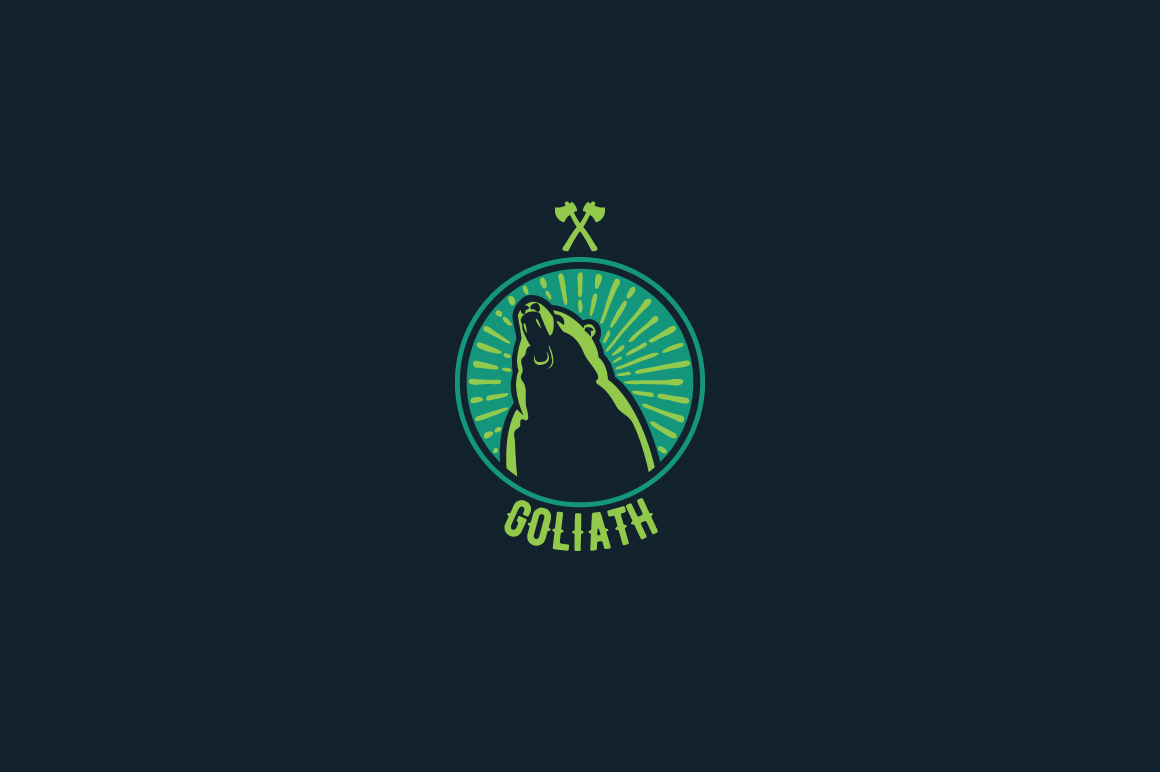
Goliath Logo Template – Building Intentional Brand Identity from the Ground Up
Every brand begins with a symbol. That symbol carries weight, whether it appears on a business card, a product label, or the header of a website. The Goliath Logo Template offers a ready framework for that symbol, but its real value goes far beyond convenience. When used thoughtfully, this template becomes a tool for strategic positioning, creative control, and long-term brand consistency. For entrepreneurs, artists, and small business owners, the question is not simply whether to use a template, but how to use it in a way that aligns with goals, audience expectations, and operational needs.
What the Goliath Logo Template Actually Provides
At its core, the Goliath Logo Template is a customizable design file available in Adobe Illustrator (AI), EPS, and Photoshop (PSD) formats. You receive a resizable vector logo at 300 dpi with CMYK print colors, along with a link to the free font used. These technical specifications matter because they ensure the logo looks sharp both on screens and in print. But the template’s strategic value lies in its flexibility. You can modify the style, add elements, change colors, or adjust text, font type, position, and size. This means you are not locked into a single look. Instead, you have a foundation upon which to build a visual identity that fits your specific context.
Why a Template Can Serve Your Branding Goals Better Than Starting from Scratch
Many professionals assume that custom design is always superior to a template. That assumption overlooks the practical realities of time, budget, and experimentation. The Goliath Logo Template allows you to iterate quickly. If a color scheme feels off or a layout does not communicate the right energy, you can adjust without starting over. This supports a goal-oriented approach to branding. Instead of chasing a perfect design from the outset, you can align the logo with your positioning and then refine it based on feedback or changing market conditions. For example, an independent music studio might begin with the template’s bold, geometric shapes, then gradually soften the palette to match the acoustic aesthetic of their artists. The template becomes a sandbox for decision-making, not a final destination.
Aligning the Template with Your Brand’s Strategic Position
Before you open the Photoshop file, consider what your logo needs to communicate. The Goliath Logo Template works best when you have a clear sense of your brand’s personality, audience, and differentiation. Are you positioning yourself as modern and disruptive, or classic and reliable? The template’s built-in structure can be adjusted to lean either way. For a technology startup, you might keep sharp lines and high-contrast colors. For a boutique consultancy, you could soften the edges and introduce muted tones. The key is to avoid treating the template as a one-size-fits-all solution. Instead, treat it as a starting point that you shape to support your broader planning goals. This intentionality reduces the risk of ending up with a logo that looks generic or mismatched.
Practical Steps for Customizing with Purpose
Start by listing three to five words that describe the feeling you want your logo to evoke. Then map those words to visual choices. For instance, if trust and stability are priorities, lean toward balanced, centered compositions and classic serif fonts. If creativity and energy are central, experiment with asymmetrical layouts or vibrant color accents. The Goliath Logo Template gives you control over every element: shape, color, text, font type, position, and size. Use this control deliberately. Change one variable at a time and evaluate how it affects the overall impression. This methodical approach prevents random tweaks that dilute the message.
Real-World Applications: Where the Template Shines
The Goliath Logo Template is particularly well-suited for artists, music studios, record labels, and creative professionals. These fields often require logo versions for diverse applications—digital streaming profiles, merchandise, posters, and physical packaging. The template’s 300 dpi resolution and CMYK color model ensure that whatever you create prints cleanly and reads well at small sizes. For a record label, this means the logo can appear on a vinyl sticker, a t-shirt, and a Spotify banner without losing clarity or color consistency. Similarly, an artist launching a personal brand can use the template to create a cohesive identifier across social media, business cards, and album art. The download includes an EPS file, which allows for easy scaling and integration into other design workflows.
Extending the Template Beyond Logos
Because the template is fully editable, it can serve as a basis for broader visual brand elements. You can extract color palettes, typography choices, and shape motifs to apply to website headers, email signatures, or presentation slides. This creates a unified look across touchpoints without requiring you to redesign each asset from scratch. For a small business owner, this consistency reinforces recognition and professionalism. For a freelancer, it saves hours of tedious formatting. The Goliath Logo Template is not just a logo file; it is a modular toolkit that supports operational efficiency in your day-to-day communication.
What to Consider Before You Download and Customize
No template is risk-free. The most common mistake is using the Goliath Logo Template without a clear understanding of your brand’s purpose. When you skip the planning phase, you may end up with a logo that looks attractive but fails to differentiate you from competitors. Another risk is over-customization. While the template allows extensive changes, altering too many elements can undermine the visual coherence that makes a logo memorable. The goal is not to remove all traces of the template, but to adapt it so thoroughly that it feels native to your brand. Additionally, always check the licensing terms for the free font included. Ensure it allows commercial use for your specific application, such as merchandise or packaging.
Strategic Questions to Ask Yourself
- What problem does my logo need to solve? Is it recognition, trust, curiosity, or affiliation?
- Where will this logo appear most frequently? On a small screen, on a printed label, or embroidered on apparel?
- How much time can I realistically dedicate to customization and testing?
- Does the template’s default style align with my industry’s visual norms, or do I need to push against them intentionally?
Answering these questions before you start editing will guide your decisions and reduce wasted effort. The template is a tool for execution, not a substitute for strategy.
Long-Term Value and Adaptation
One of the strongest arguments for using the Goliath Logo Template is its scalability over time. Brands evolve. You might shift your target audience, expand your product line, or refresh your visual identity. Because the template files are fully editable and stored in standard formats (AI, EPS, PSD), you can revisit and revise your logo years later without losing the original foundation. This is particularly valuable for creators and small businesses that do not have ongoing design budgets. Instead of paying for a complete rebrand, you can incrementally update elements—such as updating the font or adjusting the color palette to reflect a new brand direction—while retaining the core structure that your audience already recognizes.
Integrating the Template into Your Broader Workflow
For professionals who handle their own branding, the Goliath Logo Template fits into a larger ecosystem of planning and productivity. Pair it with a brand style guide where you document your font choices, color hex codes, and usage rules. This ensures that anyone on your team—or future collaborators—can apply the logo consistently. The template’s layered PSD format is especially useful for generating multiple color variations or lockups for different backgrounds. You can create a white version for dark backgrounds, a full-color version for light backgrounds, and a compressed version for social media avatars. This preparation streamlines your marketing efforts and avoids last-minute design scrambles.
Final Observations on Using a Template with Intention
The Goliath Logo Template is not a magic solution that guarantees a successful brand. It is a versatile resource that, when applied with clear goals and thoughtful decision-making, can accelerate your path to a professional visual identity. The difference between a logo that merely exists and a logo that works comes down to the choices you make during customization. Keep your audience in mind, test your designs in real contexts, and resist the urge to treat the template as a static asset. By treating it as a dynamic foundation, you position yourself to communicate more effectively, build recognition over time, and adapt as your ventures grow. Whether you are launching a record label, a coaching practice, or a creative studio, the Goliath Logo Template offers a practical starting point—not just for a logo, but for a more intentional approach to brand building.