Adelaide: A Typeface Designed for Clarity and Elegance Across Weights and Media
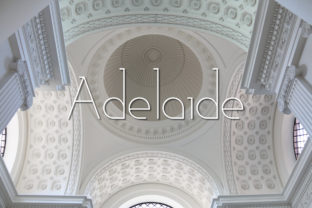
The typographic choices we make communicate far more than the words themselves. A typeface carries tone, reliability, and even the perceived credibility of a message. In recent years, Adelaide has emerged as a font family that balances refined aesthetics with practical utility, offering designers and content creators a tool that serves both expressive and functional needs. Adelaide is a stunning, elegant font that comes in 5 different weights, each designed to maintain character and legibility across a range of applications. Understanding what makes this typeface family distinct, how its weights behave in different contexts, and where it fits within broader typographic workflows can help professionals across fields make informed decisions.
The Design Philosophy Behind Adelaide
Adelaide was conceived with a clear intention: to bridge the gap between decorative elegance and everyday readability. Unlike many display-oriented fonts that sacrifice clarity for style, Adelaide preserves crisp letterforms even at smaller sizes. Its design draws from both transitional and humanist traditions, giving it a warm yet structured appearance. The proportions are generous without being wasteful, and the curves feel natural rather than mechanical. This attention to detail makes Adelaide suitable for long-form reading, brand communications, and interface elements alike.
The typeface family belongs to the serif category, but it avoids the stiffness often associated with traditional book faces. Instead, Adelaide introduces subtle contrasts in stroke weight that create a rhythm the eye follows naturally. This rhythm reduces fatigue during extended reading sessions, a feature that educators and researchers particularly value. When you examine the letterforms closely, you notice consistent spacing, balanced ascenders and descenders, and terminals that end with precision rather than abruptness. These characteristics are not accidental; they result from deliberate decisions about how type interacts with the human visual system.
The Role of Weight in Typographic Expression
Adelaide is a stunning, elegant font that comes in 5 different weights, and this range is central to its versatility. Each weight carries a distinct personality while remaining recognizably part of the same family. The lightest weight feels airy and refined, suitable for captions, footnotes, or elegant invitations. The regular weight serves as a workhorse for body text, offering clarity without drawing attention to itself. The medium weight introduces more presence, making it ideal for subheadings or emphasized passages. The bold weight commands attention while retaining the family's characteristic grace, and the extra bold weight anchors headlines and display applications with confidence.
What sets Adelaide apart is how consistently the weights scale. Many typeface families suffer from uneven stroke modulation as weight increases—thin weights can appear fragile, while bold weights collapse into darkness. Adelaide avoids this pitfall through careful interpolation across the weight axis. The counters remain open, the serifs stay proportionate, and the overall texture remains even. This consistency means that a designer can mix weights within a single document without jarring visual shifts. For example, a business report might use regular for body text, medium for section headings, and bold for key callouts, all while maintaining a cohesive visual language.
Practical Applications Across Professional Contexts
The broad utility of Adelaide becomes apparent when you examine its performance in different media. Print applications benefit from the font's sharp edges and controlled ink spread, which preserve detail even on uncoated paper stock. Marketing collateral, annual reports, and book interiors all gain a level of sophistication that distinguishes them from commodity typefaces. In digital environments, Adelaide renders reliably across screen resolutions, thanks to hinting that prioritizes legibility at common display sizes. Web designers find that the font's x-height—the height of lowercase letters relative to capitals—strikes a balance between compactness and readability, reducing the need for excessive line spacing.
Branding professionals appreciate Adelaide for its ability to convey both tradition and modernity. A luxury hotel chain might use the lighter weights for room signage and the bold weight for logo lockups, creating a system that feels coherent across touchpoints. Similarly, a legal firm could deploy Adelaide in its correspondence and website, projecting trustworthiness without appearing outdated. The typeface adapts to the context rather than imposing a rigid aesthetic, which is a hallmark of well-designed font families.
Workflow and Implementation Considerations
Integrating Adelaide into a design workflow requires attention to technical details that affect final output. The font is available in OpenType format, which ensures broad compatibility across operating systems and design applications. It includes standard ligatures, proportional lining figures, and stylistic alternates that give typographers creative flexibility. For instance, the discretionary ligatures can add a touch of formality to headlines, while the default settings work cleanly for body copy.
When setting type with Adelaide, the choice of weight should align with the medium and the message. Light and regular weights perform well at sizes between 9 and 14 points for continuous reading. Medium and bold weights become effective at 12 points and above, where their increased stroke contrast adds emphasis without overpowering the page. The extra bold weight truly shines at 18 points or higher, where its presence can anchor a layout. Testing reveals that Adelaide maintains its character even at very large sizes, making it suitable for posters, hero images, and environmental graphics.
Pairing Adelaide with complementary typefaces expands its utility. Sans-serif families with neutral proportions, such as those in the grotesque or neo-grotesque classification, create a contrast that feels contemporary. For projects requiring a more classical tone, a transitional serif with a lighter color can sit alongside Adelaide without competing. The key is to respect the hierarchy: Adelaide's serif structure provides a traditional anchor, while a sans-serif companion handles supporting roles like data labels or navigation elements.
Readability, Accessibility, and User Experience
Readability extends beyond mere legibility. A truly readable typeface supports comprehension, reduces eye strain, and accommodates diverse reading abilities. Adelaide earns high marks in this area because of its even color, adequate counter sizes, and unambiguous letter differentiation. The lowercase "a" and "e" remain distinct even at small sizes, and the uppercase "I" and lowercase "l" are clearly differentiated—a detail that matters for readers who rely on rapid visual scanning.
Accessibility considerations also favor Adelaide. The font's moderate stroke contrast ensures that people with visual impairments or dyslexia can process text more comfortably than with high-contrast display faces. The generous spacing between letters, combined with consistent rhythm, reduces the cognitive load associated with decoding text. For educators creating instructional materials, or for healthcare professionals preparing patient handouts, these features translate into better outcomes. A patient who can easily read discharge instructions is less likely to misunderstand critical information, and a student who can read a textbook without fatigue retains more content.
Comparative Observations in Typographic Trends
Current typographic trends lean toward versatility and authenticity. Organizations seek typefaces that work across platforms, respect brand heritage, and convey humanity. Adelaide aligns with these trends without chasing fads. It does not mimic the geometric severity of many contemporary sans-serifs, nor does it retreat into decorative obscurity. Instead, it occupies a middle ground that feels both familiar and fresh. This positioning gives it longevity; a typeface that relies on extreme styling may feel dated within a few years, but Adelaide's restraint ensures relevance over time.
Comparing Adelaide to other serif families in its weight class reveals its strengths. Some popular alternatives offer more weights but sacrifice consistency across the range. Others prioritize decorative flair over practical performance. Adelaide strikes a balance by offering exactly five carefully calibrated weights, each vetted for real-world use. This focused approach means that designers spend less time tweaking spacing or compensating for weak weights, and more time concentrating on content and layout.
Real-World Use Cases and Testimonials from Practice
Designers working in editorial contexts report that Adelaide reduces production time. One magazine art director noted that switching to Adelaide eliminated the need to adjust tracking and kerning for every article spread—the font's built-in spacing worked reliably across columns. A web developer working on a content-heavy site observed that Adelaide loaded efficiently as a web font and rendered consistently across browsers, including older versions that struggle with complex typefaces. These practical benefits accumulate over the course of a project, saving both time and frustration.
For small business owners who manage their own communications, Adelaide offers professional results without requiring deep typographic expertise. A boutique owner might use Adelaide for product labels, website body text, and email newsletters, creating a unified brand voice that feels polished. The availability of multiple weights means that a single purchase covers a wide range of needs, from fine print to bold headlines. This cost-effectiveness matters for entrepreneurs who cannot invest in multiple font licenses.
Educators and researchers also find Adelaide useful for academic publishing. Conference papers, journal articles, and institutional reports benefit from the font's clarity and neutrality. Reviewers and readers respond positively to documents that are easy to navigate, and Adelaide's hierarchical weight system helps structure information intuitively. When a paper uses regular weight for the main argument, bold for key terms, and light for supplementary notes, the reader's eye moves naturally through the content without needing explicit cues.
Future-Proofing Typography with Adelaide
As digital media continues to evolve, the demands placed on typefaces will only increase. Responsive design requires fonts that perform across a spectrum of sizes and resolutions. Variable font technology, which allows continuous adjustment of weight and other attributes, represents one direction for the industry. Adelaide's design, with its clean interpolation across weights, suggests that it could adapt well to variable formats if the foundry pursues that development. For now, the static weights offer a proven solution that works reliably in current environments.
The sustainability of a typeface also depends on its ability to age gracefully. Fonts that feel too tied to a specific era tend to cycle out of favor. Adelaide avoids temporal markers by focusing on classical proportions and restrained detailing. It does not lean on trendy quirks or exaggerated features. This timelessness means that a brand adopting Adelaide today will not feel pressured to rebrand in a few years when typographic fashion shifts. Instead, the font becomes a stable element of visual identity, one that supports messaging rather than competing with it.
Integration with Broader Design Systems
When Adelaide becomes part of a larger design system, its value multiplies. Style guides that specify Adelaide for headings, subheadings, and body text gain consistency across documents, presentations, and digital interfaces. Teams working on collaborative projects can rely on the font's predictable behavior, reducing the need for manual adjustments. For organizations scaling their communications, a well-documented typographic system anchored by Adelaide saves time and preserves brand integrity.
Adelaide is a stunning, elegant font that comes in 5 different weights, and this range provides the building blocks for a robust typographic hierarchy. By assigning each weight a clear role—light for secondary information, regular for primary reading, medium for subheadings, bold for emphasis, and extra bold for headlines—designers create a system that users internalize quickly. This consistency improves the overall user experience, whether in a mobile app, a printed manual, or a conference presentation.
Ultimately, the choice of a typeface is a choice about how seriously an organization takes its communication. Adelaide represents a commitment to clarity, elegance, and practical utility. It does not shout for attention, but it ensures that every word is read with ease and understood with confidence. For professionals across domains—from publishing and branding to education and technology—Adelaide offers a reliable foundation on which to build meaningful content.