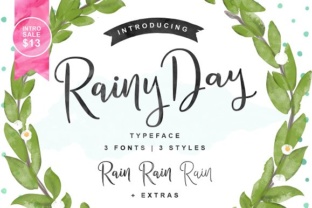
Rainy Day Font: A Blend of Modern Type and Calligraphy
When you need a typeface that feels both fresh and timeless, few options capture that balance as naturally as Rainy Day. Designed by Ian Mikraz, this hand-drawn font merges the clean structure of contemporary typefaces with the expressive flow of old calligraphy. The result is not just another decorative font—it is a versatile tool that can elevate your projects without overwhelming them. Whether you are a designer, a marketer, or someone who simply enjoys crafting beautiful materials, understanding what Rainy Day offers may open new creative possibilities.
What Makes Rainy Day Distinctive
At first glance, Rainy Day feels familiar yet surprising. Its letters carry the warmth of hand-drawn strokes, but the overall silhouette remains readable and modern. This hybrid quality makes it suitable for projects where you want personality without sacrificing clarity. Unlike many script fonts that lean heavily into ornamentation, Rainy Day keeps its character grounded. The fluidity of the lines recalls ink on paper, but the proportions are carefully balanced for digital use. For professionals who need a font that works across print and screen, this combination is rare and valuable.
The font was created with intentional imperfection—slight variations in stroke thickness, gentle curves, and natural spacing give it an organic feel. This is not a sterile, machine-perfect typeface. It carries the human touch that many audiences respond to, especially in an era of automated design. If you are looking for a way to make your message feel more personal, Rainy Day can help you achieve that without resorting to gimmicks.
The Four Variations and Their Practical Roles
Rainy Day comes in four distinct styles, each with its own strengths. Understanding these variations is key to getting the most out of the font.
Rainy Day Script
This is the core of the family. The script variation features flowing, connected letters that mimic natural handwriting. It works well for headlines, invitations, quotes, and branding elements where you want a gentle, approachable tone. Because the script remains legible even at moderate sizes, it can be used for short paragraphs in editorial layouts or social media graphics. The fluidity here is controlled—it does not sacrifice readability for style.
Rainy Day Line
If you need a lighter, more delicate version, Rainy Day Line offers an outline style that works beautifully for layered designs. This variation is especially useful for creating depth in logos, watermarks, or decorative elements. When paired with the script version, it allows you to build visual hierarchy without adding clutter. The line weight is consistent enough to remain visible at smaller sizes, which is a practical advantage for collateral like business cards or product labels.
Rainy Day Extras
This set includes ornamental swashes, alternates, and decorative glyphs that extend the creative range of the font. For example, you can add flourishes to initial letters or replace standard characters with more expressive forms. If you work on invitations, certificates, or any project that benefits from embellishment, these extras give you control over how much ornamentation you introduce. You are not locked into a single look—you can adjust the level of detail to suit the context.
Rainy Day Inline
The inline version features an interior cutout effect that creates a two-tone appearance. This is particularly effective for titles, posters, and packaging where you want the text to stand out with a built-in highlight. The inline style retains the same hand-drawn quality as the script, so it feels consistent with the rest of the family. You can use it as a standalone style or combine it with other variations for layered typography.
Who Benefits Most from Rainy Day
Because the font balances personality with readability, it appeals to a wide range of users. Designers and creative professionals will appreciate the flexibility of having four coordinated styles—it reduces the need to search for complementary fonts. Marketers and small business owners can use Rainy Day to create consistent branding across social media, print ads, and packaging without hiring a designer for every asset. Bloggers and content creators may find it useful for featured images, headers, and quote cards where a distinctive look helps content get noticed.
Publishers and educators working on materials for younger audiences or creative subjects may also benefit. The hand-drawn quality feels approachable, which can make learning materials or newsletters feel less formal and more engaging. Freelancers who produce a variety of projects—from logos to flyers to digital content—will find that one font family can cover many needs, simplifying their workflow and reducing font management overhead.
Practical Applications and Real-World Examples
Imagine you are designing a brand identity for a small café. The script variation can anchor the logo, while the line version works for secondary text like taglines or menu headers. The extras let you add a decorative initial to the logo mark, and the inline style can be used for special promotions or seasonal signage. With just one font family, you can build a cohesive visual system that feels custom.
For a wedding invitation suite, Rainy Day offers the romantic, hand-drawn feel that couples often want, but without the fragility of overly ornate scripts that become unreadable at small sizes. The script works for the main text, the line version is ideal for borders or subtle accents, and the extras provide decorative elements that tie the suite together. Because the styles are designed to work as a set, you avoid the mismatch that sometimes occurs when mixing fonts from different designers.
Social media content is another area where Rainy Day shines. A quote graphic using the script variation feels personal and shareable. The inline style can be used for highlighting key phrases, while the extras add visual interest without requiring design software skills. This is especially helpful for entrepreneurs who manage their own content and need efficient ways to create polished graphics.
Considerations and Limitations
No font is perfect for every situation, and Rainy Day has some factors worth noting. The hand-drawn style, while beautiful, may not suit corporate or highly formal contexts where a more neutral typeface is expected. Additionally, the font is known to have compatibility issues with some versions of Microsoft Word. If you work primarily in Word, you may experience rendering problems or missing characters. Testing the font in your specific software environment before committing to a large project is a practical step. Alternatives like Google Docs, Adobe Creative Suite, or design tools such as Canva or Affinity Designer tend to handle hand-drawn fonts more reliably, so consider your workflow.
Another point to keep in mind is that the decorative extras and alternates require font-aware software to access. Basic word processors may not expose these features, which limits what you can do without a design application. If your projects are mostly text-heavy and simple, the script and line versions alone may still serve you well, but the full creative range of Rainy Day is best realized with tools that support OpenType features.
Making the Most of Rainy Day
To get the best results, pair Rainy Day with a clean, neutral font for body text. A simple sans-serif like Open Sans or Lato will let the script stand out without competing. Use the decorative styles sparingly—too many flourishes can reduce legibility and overwhelm the viewer. The strength of this font family is its ability to add warmth and character while remaining functional. Treat it as a tool for emphasis and personality, not as a default for every paragraph.
If you are new to working with hand-drawn fonts, start with the script variation for headlines and titles. Experiment with the line and inline styles for accents. The extras can be added as you become more comfortable. This gradual approach lets you build confidence and discover what works best for your specific projects.
Rainy Day offers a thoughtful fusion of old and new—a hand-drawn quality that feels human, combined with the structure needed for modern design. Whether you are creating a brand, designing an invitation, or simply looking for a font that makes your content stand out, this family provides tools that are both beautiful and practical. Understanding its variations and limitations will help you use it effectively, so you can focus on what matters most: communicating your message with clarity and style.