Deco Neue Wilde: A Filter Font with Character
There is something quietly hypnotic about a lava lamp. You watch the blobs stretch, split, and merge without any clear purpose, yet you cannot look away. Deco Neue Wilde carries that same strange, organic energy. It is a filter font built on the structural bones of Deco, but what comes out is anything but rigid. The shapes feel alive, as though they are shifting in real time. For anyone who works with type, this font offers something that clean, predictable faces rarely do: a sense of movement and impermanence that draws the eye and holds attention.
What Makes Deco Neue Wilde Distinctive
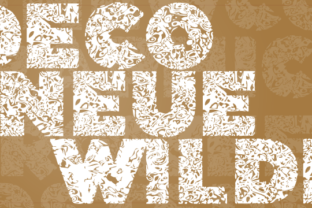
At its core, this typeface starts with Deco geometry—symmetrical, bold, and decorative. But the filter transforms those clean lines into something softer, almost fluid. Terminal strokes curl inward with irregular weight, curves swell unevenly, and negative spaces feel pocketed rather than precise. This is not a font for body text or small sizes. It is meant to be seen, not read in bulk. The letters demand space and a certain amount of visual breathing room to reveal their character.
Think of it as the typographic equivalent of a watercolor wash applied over a structural drawing. The underlying framework keeps the letters legible and grounded, while the filter introduces texture, unpredictability, and warmth. That combination makes Deco Neue Wilde particularly effective when you need a headline or display element that feels handcrafted without looking naive or messy.
Why the Lava Lamp Comparison Fits
You could waste a surprising amount of time just looking at this font. Each letterform seems to hold its own subtle irregularities—a thickened serif here, a softened curve there—that make every character feel slightly different from the next. In a lava lamp, the shapes never repeat exactly. Similarly, Deco Neue Wilde introduces enough inconsistency that the same word set in this typeface can appear fresh each time you glance at it. That quality is rare in digital typography, where consistency is usually the highest priority.
For designers and creators, this opens up a specific kind of possibility. You can use Deco Neue Wilde to evoke spontaneity without sacrificing structure. It feels organic but controlled, much like the best hand-lettered work. That balance is hard to strike with standard fonts, and it is what makes this face worth considering for projects that need to communicate personality without becoming chaotic.
Practical Benefits for Creators and Professionals
The practical value of Deco Neue Wilde becomes clear when you place it in real contexts. Consider a small business owner designing packaging for a specialty product—say, artisan candles or small-batch tea. A standard sans serif might communicate cleanliness, but it won't suggest warmth or organic origins. This font steps in to fill that gap. The irregular, softened shapes signal handmade quality without requiring any illustration or additional texture.
For marketers and bloggers, the font works well as a hero headline on landing pages or social media graphics. Because it already carries visual interest, you do not need to layer on effects, shadows, or complex backgrounds to make it stand out. That saves time during production and keeps the final result from looking overworked. One clean headline set in Deco Neue Wilde can do what three design elements usually try to achieve together.
Publishers and educators working with limited budgets may also find value here. If you produce zines, flyers, or presentation slides, you often need type that looks intentional without requiring a full design overhaul. Using this font for titles or pull quotes gives the layout an immediate point of focus. It creates hierarchy naturally—readers know where to look first because the shapes themselves feel bigger, softer, and more inviting than the surrounding text.
Freelancers and hobbyists who create digital products, templates, or printables can also benefit. A set of quote cards, a printable planner cover, or a course workbook title page all gain character when the headline uses Deco Neue Wilde. It adds perceived value because the typography looks considered, not default. That matters whether you are selling a product or sharing work in a portfolio.
Who May Benefit Most
While the font can serve many people, it works best for those who already have a clear visual direction and need type that reinforces it. If you are designing for a brand identity built around warmth, nature, craft, or nostalgia, Deco Neue Wilde fits naturally. It also suits projects where the audience expects something unconventional—art galleries, independent publishers, creative agencies, and event posters are all strong candidates.
Conversely, if your work demands strict readability, corporate consistency, or accessibility at small sizes, this is not the right choice. The filter reduces legibility at text sizes, and the organic irregularities can cause confusion in long reading passages. Save it for moments where display type makes sense—headlines, logos, badges, and decorative elements. That is where its strengths shine and where the investment in a distinctive font pays off.
Entrepreneurs launching a personal brand or a lifestyle business may also find the font aligns with the tone they want to project. A yoga studio, a ceramics shop, a small farm, or a creative coaching practice all benefit from type that feels human and approachable. Deco Neue Wilde communicates that sensibility without trying too hard. It does not shout for attention; it simply looks interesting enough to invite a second look.
Considerations and Fit
No typeface is universal, and Deco Neue Wilde has clear limits. Its filter-based design means it will not render sharply at pixel sizes, so avoid using it in digital body text or UI labels. It also carries a strong personality, which can clash with overly formal or minimalist layouts if not balanced carefully. Pair it with clean, neutral fonts—a simple sans serif or a lightweight slab—to let the headline breathe without creating visual noise.
Another practical point: because the irregularities are part of the font design, you cannot easily edit them. If you need precise control over every curve and terminal, you would be better served by a custom lettering approach. But if you want that handcrafted feel without the time and cost of custom work, this font gives you a fast, repeatable solution. It performs its function out of the box, with no need for additional effects or manual tweaking.
Consider also the medium. In print, the organic shapes look especially compelling on uncoated paper, which absorbs ink slightly and adds further texture. On screen, it works well in large sizes with ample padding. Test it at different scales before committing to a layout. The font's character changes noticeably as it grows—what looks subtle at 48 points becomes dramatic at 120 points.
Getting the Most from Deco Neue Wilde
To use Deco Neue Wilde effectively, give it room. Do not crowd it with competing textures, busy backgrounds, or secondary typefaces that fight for attention. Let it occupy clear space where the irregular letterforms can register fully. A simple two-color palette—one for the type, one for the background—often yields the best results.
Experiment with letter spacing as well. Because the shapes are irregular, tightening the spacing too much can cause adjacent characters to blend into each other. A little extra tracking helps each letter keep its identity and makes the whole word easier to read at a glance. In headlines, wider spacing also reinforces the decorative quality and gives the layout an air of deliberateness.
If you are layering it with other design elements, think in terms of contrast. Pair the soft, organic headlines with sharp geometric icons or clean photography. That contrast creates tension and interest without requiring elaborate compositing. The font does the heavy lifting; everything else can stay simple.
For small business owners and creators working with limited resources, this typeface can also simplify decisions. When you have a headline font that already communicates warmth, craft, and character, you spend less time trying to make a generic font feel special through effects and styling. That saves time, reduces tool complexity, and keeps your design process focused on content rather than decoration.
Ultimately, Deco Neue Wilde is a tool for moments that need a bit of presence. It is not for every job, but when the job calls for something that feels both solid and fluid, it delivers in a way that standard fonts cannot. Like watching a lava lamp, the experience is subtle, a little hypnotic, and surprisingly memorable.