Integrating Mebinac Regular into Your Professional Workflow
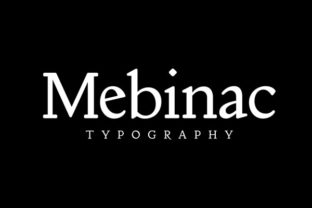
Every project, whether it is a marketing campaign, an educational course, or a brand identity, relies on clear communication. The tools you choose to facilitate that communication directly impact both the efficiency of your creation process and the clarity of your final output. Typography stands as a critical pillar in this system. Mebinac Regular, a neat serif font designed by Alan Hayward, offers a practical foundation for professionals who demand readability, consistency, and a polished aesthetic from their work.
This article explores how to integrate Mebinac Regular into your content and design workflows. Rather than treating it as a mere stylistic afterthought, we will examine it as an active component of your planning, execution, and quality control processes. For entrepreneurs, educators, marketers, and creators, a deliberate approach to typography reduces friction and elevates the end user’s experience.
The Case for a Reliable Serif Font in Your Toolkit
Before diving into specific implementation steps, it is worth understanding what makes Mebinac Regular a strong candidate for a workflow-focused typeface. It is a serif font, but it is distinguished by its neat, orderly letterforms. Unlike traditional book serifs that can feel overly ornate in digital contexts, Mebinac Regular balances classic authority with modern clarity. Its uniform stroke weight and generous spacing ensure that it performs well across both print and screen environments.
From a workflow perspective, this versatility is valuable. A single typeface that handles long-form reading comfortably and scales down for captions or labels reduces the number of variables you need to manage. Instead of switching between multiple font families, you can build a cohesive system around Mebinac Regular. This consolidation simplifies your font licensing, reduces load times on the web, and creates a consistent visual language for your audience.
Mapping Mebinac Regular to Your Project Phases
A structured workflow accounts for three distinct phases: preparation, execution, and follow-up. Integrating Mebinac Regular into each of these stages ensures that your typography remains consistent and performant from start to finish.
Preparation: Defining Standards Before You Start
Preparation is the most important phase for establishing typographic discipline. Begin by downloading and installing the complete Mebinac family into your font management system. Licensing the font correctly for your applications, whether desktop, web, or mobile, prevents legal and technical issues down the line.
Next, define your hierarchy. Decide where Mebinac Regular will sit in your visual system. Will it serve as the primary body text for documents and web articles? Will it be used for subheadings or callout boxes? Document these decisions in a simple style guide or template. For a small business owner, this might mean setting up a proposal template in Word or Google Docs with Mebinac Regular applied to all body styles. For a designer, it means creating a library of paragraph and character styles in Adobe InDesign or Affinity Publisher. Investing time in this setup phase eliminates the need to manually adjust formatting during the high-focus execution phase.
Execution: Maintaining Flow During Production
When you enter the active creation phase, your typography should support your focus, not break it. Because Mebinac Regular is well-spaced and highly legible, you can draft content directly into your chosen tool without constantly tweaking kerning or leading. This is particularly beneficial for bloggers, writers, and educators who produce long-form content.
If you are designing a multi-page report or ebook, apply Mebinac Regular to your body text styles. Its neat serif structure guides the eye smoothly across lines of text, reducing reader fatigue. For headings, consider pairing it with a bolder weight from the same family, or with a complementary sans-serif font for contrast. The key is to make these stylistic decisions early and apply them systematically using stylesheets or paragraph styles. This approach ensures that your document remains coherent, even as you move sections around or collaborate with other team members.
Follow-Up: Ensuring Fidelity in Final Output
After the main content is complete, a review phase focused on typography is essential. Check for widows, orphans, and awkward line breaks in your final PDF, print proof, or web build. Because Mebinac Regular is a professionally hinted font, it should render cleanly across common browsers and operating systems. However, it is good practice to verify the final output, especially if you are embedding the font in a presentation or converting it to a web font.
Archiving your final files with the correct font specifications is a step that many professionals overlook. If you need to revisit a project months later, having a clear record of which fonts were used and in what weights saves enormous amounts of time. Include the Mebinac family in your project asset folder, along with your style guide notes.
Building a Visual Hierarchy with Mebinac Regular
Visual hierarchy is the foundation of effective communication. It guides the reader's eye from the most important elements to supporting details. Mebinac Regular, with its clean and neutral appearance, provides a reliable baseline for building this hierarchy.
In a typical workflow, you might use a bold or display weight for primary headlines, a regular weight for body copy, and an italic weight for annotations or captions. The beauty of a cohesive family like Mebinac is that these weights are designed to work together harmoniously. You can establish a clear typographic scale using standard ratios. For example, your body text might sit at 16px with a line height of 1.5, while your H2 headings sit at 28px. This mathematical consistency creates a rhythm that readers find comfortable and professional.
When integrating Mebinac Regular into a web workflow, ensure your CSS uses a proper font stack that includes fallbacks. If you are using it in a content management system, configure your block editor styles to reflect your chosen hierarchy. This practice ensures that your content maintains its structure even if the font file takes a moment to load.
Practical Implementation Scenarios
The following scenarios illustrate how different professionals can integrate Mebinac Regular into their specific workflows.
For the Marketing Team or Small Business Owner
Brand consistency is a major driver of trust. Using Mebinac Regular across your website headlines, email newsletters, and downloadable lead magnets creates a cohesive brand experience. Pair it with a complementary sans-serif for UI elements like buttons and navigation bars. By standardizing your typography in your design tool of choice, you reduce the friction of switching between different brand assets. Each new piece of content reinforces the same visual identity, making your brand look established and reliable.
For the Educator or Course Creator
Readability is the primary goal in educational materials. Mebinac Regular excels in long-form reading environments. Use it in PDF workbooks, slide decks, and online course modules. Its clear, neat appearance helps learners focus on the content itself. Structuring your course materials with a consistent heading and body hierarchy using Mebinac Regular improves the overall learning experience and reflects a professional standard of instructional design.
For the Freelancer or Creator
Your portfolio and proposals are reflections of your attention to detail. Using Mebinac Regular in your media kit, project proposals, and invoices communicates a sense of quality and precision. Create a master template for your proposals that uses Mebinac Regular for all text. This ensures that every estimate you send out is aligned with your personal brand, saving you time and reinforcing your professional image.
Maintaining Consistency Over the Long Term
Typography is not a one-time decision. As your library of content and brand assets grows, maintaining consistency becomes more challenging. A lack of discipline can lead to a fragmented brand presence. To avoid this, treat your font choices as an ongoing system.
Store the Mebinac font files in a centralized location that is accessible to everyone on your team. Use a font management application to keep your library organized. If you are working with developers, provide them with the correct CSS font stacks and weight definitions. Regular audits of your brand assets can help you catch instances where the wrong font or weight has been used. By establishing these maintenance habits, you ensure that the clarity and professionalism Mebinac Regular provides remains a constant feature of your work.
Ultimately, integrating Mebinac Regular into your workflow is a practical investment in the quality of your output. It is a tool that supports clear thinking, efficient production, and consistent delivery. By planning for it, implementing it systematically, and maintaining it over time, you create a durable foundation for all your professional content.