Fire Skin: A Beautiful Blackletter Font for the Modern Creative Age
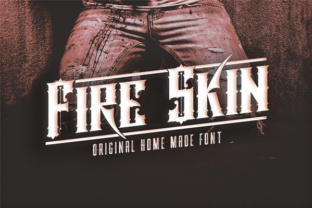
Typography has always been more than just words on a page. It carries mood, history, and intention. In recent years, designers and brands have been reaching beyond the safe, neutral fonts of the past, seeking typefaces that tell a story and command attention. Enter Fire Skin, a stunning blackletter font created by VMF Font that bridges centuries-old craftsmanship with contemporary visual needs. This is not a relic of medieval manuscripts; it’s a versatile tool for anyone who wants their message to stand out with drama, elegance, and authenticity.
Why Blackletter Matters Now More Than Ever
Blackletter typography, with its dense, angular strokes and ornate details, carries a weight that few other styles can match. For decades, it was associated primarily with heavy metal logos, traditional certificates, or old-world print. But today’s design landscape is different. Audiences are tired of sameness. A flat, minimalist approach that once felt refreshing now often reads as generic. Creators and businesses alike are rediscovering the power of decorative fonts to convey personality, heritage, and a sense of deliberate craftsmanship.
Fire Skin taps directly into this shift. Its design respects the traditional blackletter structure—those dramatic thick-to-thin transitions, the sharp serifs, and the rhythmic repetition of vertical strokes—while smoothing the forms for modern screens and print applications. The result is a font that feels both historic and fresh. It doesn’t try to imitate a medieval scribe; it reimagines blackletter for a world that values texture and storytelling over sterile uniformity.
In a marketplace where first impressions happen in milliseconds, a distinctive typeface can be the difference between blending in and being remembered. Fire Skin gives you that edge without shouting. It speaks with a quiet authority, whether on a beer label, a wedding invitation, or a website hero headline.
How Fire Skin Fits Into Changing Workflows and Creative Practices
The way we work and create has transformed. Freelancers juggle multiple brands, marketers need assets that work both online and off, and educators present materials that must capture wandering attention. Design tools have become more accessible, but the need for unique, high-quality assets has only grown. Fire Skin is a response to that need—a single font that can serve as the anchor for a brand identity or the accent that elevates a simple design.
Consider a small coffee roastery wanting to evoke a sense of tradition and handcrafted quality. They could layer Fire Skin on a kraft paper texture for labels, use it sparingly on signage, and carry the same bold lettering into their social media graphics. The coherence of one strong typeface simplifies their workflow and strengthens recognition. For a wedding invitation designer, Fire Skin provides the romance and gravitas that scripts often lack, giving the couple’s names a monumental feel without resorting to cliché.
Even within digital product design, blackletter has found a niche. Landing pages for premium products, limited-edition releases, or creative agencies can use Fire Skin for a single headline to anchor an otherwise minimalist layout. The contrast between ornate lettering and clean whitespace is powerful—it signals that someone took care in the details.
From Niche to Mainstream: The Evolution of Blackletter in Design
It wasn’t long ago that using a blackletter font risked looking dated or gimmicky. The association with heavy metal and historical reprints made it a niche choice. But as design culture has matured, so has our understanding of typographic voice. We now appreciate that a font’s history can add layers of meaning to a message. Fire Skin represents this evolution—it is not a copy of an old typeface but a contemporary drawing informed by tradition.
VMF Font, the foundry behind Fire Skin, has carefully balanced legibility with ornamentation. The letterforms are distinct enough to be read at larger sizes, yet they retain the intricate details that make blackletter so visually rich. This balance is crucial. Earlier blackletter revivals often failed because they prioritised historical accuracy over usability. Fire Skin succeeds because it respects the genre while adapting to modern expectations—clear spacing, consistent weight distribution, and a full character set that includes numerals and punctuation, which are often neglected in decorative fonts.
We are also seeing a broader cultural shift toward artisanal and authentic branding. Consumers are drawn to stories of craft, heritage, and uniqueness. A font like Fire Skin visually communicates those values without a single marketing sentence. It’s why you see blackletter appearing on craft beer cans, boutique clothing tags, and indie music posters. These are brands that want to belong to a lineage of quality, not just trendiness.
Practical Implications for Creators, Professionals, and Businesses
Understanding where and how to use Fire Skin can make a real difference in your projects. It is a display font, best reserved for headlines, short titles, logos, and focal points. Using it for body text at small sizes can defeat its purpose and hurt readability. That said, even a single line of Fire Skin can transform a layout from standard to special.
- For marketers: Use Fire Skin in limited-edition packaging or campaign headers to create urgency and perception of exclusivity. Pair it with a clean sans-serif like Helvetica or a simple serif for contrast.
- For bloggers and educators: A blog post title set in Fire Skin immediately signals a distinctive voice. It works especially well for opinion pieces, tutorials with a personal angle, or content about history and craftsmanship.
- For business owners: If your brand has a heritage angle—family-run, traditional methods, local roots—Fire Skin visually tells that story. Use it on your logo, business cards, and about page hero.
- For freelancers and hobbyists: Leverage Fire Skin’s beauty to create custom wedding invitations, holiday cards, or wall art. The font itself becomes the art piece.
When integrating Fire Skin into a project, consider the context. It pairs naturally with rough textures, dark backgrounds, and metallic accents. In digital spaces, avoid overloading a page with multiple decorative fonts; let Fire Skin be the star. Also, pay attention to contrast—blackletter works best when there is ample breathing room around it.
Real Examples Where Fire Skin Shines
Imagine a limited-edition whiskey label. The name is set in Fire Skin over a dark, woodgrain background. The letters feel carved, timeless, and valuable. Or consider a music festival poster announcing a headline act. The band name in large Fire Skin creates immediate gravitas, while the supporting details in a thin, neutral font keep the hierarchy clear. Even in a digital context, such as a splash page for a new product launch, a Fire Skin headline can stop the scroll—especially when animated subtly.
Another observation comes from the rise of dark mode interfaces. Blackletter fonts, with their dense strokes, often look stunning on dark backgrounds. Fire Skin’s balanced spacing ensures it remains legible even when reversed out in white on black. This is a small but meaningful detail that shows the designer considered real-world usage.
Why People Are Paying More Attention to Fonts Like Fire Skin
The appetite for uniqueness in visual identity grows as the tools to create become democratised. With hundreds of thousands of fonts available for free or affordable prices, the challenge is no longer access—it’s curation. People are paying attention to typefaces that offer something beyond basic functionality. Fire Skin appeals because it delivers a strong aesthetic personality in a package that is professional and usable.
Moreover, the post-pandemic emphasis on meaningful connection has extended into design. Businesses want to feel human, not corporate. Educators want to engage students with materials that feel less like textbooks. Creators want every element of their work to pull its weight. A font like Fire Skin does exactly that—it adds emotional texture without extra effort.
There is also the influence of social media, where visual consistency is key. A profile, highlight cover, or pinned post using Fire Skin signals a curated, thoughtful brand. It’s a small but effective way to differentiate in feeds filled with generic templates.
Final Thoughts on Using Fire Skin Responsibly and Effectively
Like any powerful tool, Fire Skin is best used with intention. Its beauty can become overwhelming if applied to every element, but when reserved for focal points, it elevates the entire design. Here are a few grounded recommendations:
- Respect the context: Not every brand or project needs blackletter. Evaluate if the message aligns with the font’s historic and aesthetic weight. If you’re designing for a modern tech startup, Fire Skin might clash unless you deliberately use contrast as a statement.
- Pair with simplicity: Combine Fire Skin with minimal, lightweight fonts. The contrast allows each to shine. Sans-serif companions are safe choices; a thin, italic serif can also create an interesting dynamic.
- Test at multiple sizes: Check how Fire Skin reads in the actual environment—web, print, mobile. Adjust letter-spacing or scaling if needed. The font is designed for display, so it will look best from 36 points upward.
- Use colour with care: Black, metallic tones, or deep jewel colours enhance its drama. Busy patterns or clashing colours can distract from the letterforms.
Fire Skin by VMF Font is not just a typeface; it’s an invitation to think differently about typography. It reminds us that the written word can be both readable and beautiful, functional and artful. Whether you are a seasoned designer or a business owner taking your first steps into professional branding, this font offers a way to communicate with depth and style. In a world where every detail matters, choosing a font like Fire Skin says you care about how your message looks, feels, and endures.