Raisia: A Handwritten Mono Line Font with Quiet Character
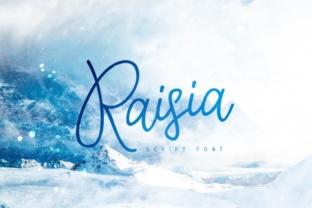
There is something refreshingly understated about a font that does not shout. Raisia, a thin handwritten mono line font created by Chekart, offers exactly that kind of restrained elegance. It is not flashy, but it leaves an impression. In a visual landscape often dominated by bold weights and exaggerated strokes, Raisia stands out precisely because it holds back. Its fluid letters move across the page with a natural, unhurried rhythm, making it an ideal choice for anyone who wants their design to speak with a human voice rather than a mechanical one.
The appeal of such a typeface goes beyond mere aesthetics. It speaks to a broader shift in how we communicate visually. As digital spaces become increasingly crowded, there is a growing hunger for authenticity. Readers and viewers have grown weary of sterile, templated designs. They want to feel a connection, a sense that a real person was behind the message. Raisia answers that need by offering a handwritten quality that feels personal without sacrificing legibility. It is a tool for bringing warmth back into the visual conversation.
The Quiet Rise of Handwritten Mono Line Fonts
Handwritten typefaces are not new, but the way we use them has evolved significantly. Early digital handwritten fonts often tried too hard to mimic cursive or calligraphy, resulting in something that felt exaggerated or simulated. Mono line fonts, with their consistent stroke width and straightforward construction, offer a different path. They strip away unnecessary ornamentation and focus on the purity of the line.
Raisia belongs to this more nuanced tradition. It does not try to imitate a fountain pen or a brush. Instead, it captures the essence of a fine-tipped marker or a delicate pencil sketch. The letters flow without dramatic variation in thickness, which gives them a modern, even minimalist feel. At the same time, the handwritten irregularity keeps them anchored in something human. This balance is not easy to achieve. Many fonts fall into the trap of looking either too rigid or too chaotic. Raisia walks the line between order and spontaneity, and that is where its quiet relevance lies.
Why Thin Weight Matters in Contemporary Design
The choice of a thin weight is deliberate and worth examining. Thick, bold fonts command attention, but they can also feel aggressive or heavy. Thin fonts, by contrast, invite the reader to lean in. They create a sense of intimacy. When you use a typeface like Raisia, you are asking your audience to take a closer look, to engage with the details.
This aligns well with current design trends that favor negative space, light textures, and understated sophistication. In branding, for example, thin handwritten fonts are increasingly used for businesses that want to communicate elegance, approachability, or craftsmanship. A boutique coffee shop, a skincare line, a freelance photographer, or a small publishing house might all gravitate toward such a typeface because it signals quality without arrogance. Raisia, with its mono line construction and fluid strokes, fits seamlessly into this sensibility.
Practical Applications for Creators and Professionals
Knowing why a font works is one thing. Knowing where to use it is another. Raisia is versatile, but it is not a jack-of-all-trades typeface. Its strengths shine brightest in specific contexts, and understanding those contexts will help you make better design decisions.
- Brand identity and logotypes. Because Raisia feels personal and hand-drawn, it works beautifully for logos, especially for businesses built around a personal brand or creative service. A single word set in Raisia can convey warmth and care in a way that a sans-serif cannot.
- Social media graphics. In an environment where users scroll quickly, a typeface that feels authentic can stop the thumb. Raisia works particularly well for quotes, announcements, or story titles where you want the text to feel like it was written just for that moment.
- Invitations and stationery. Weddings, events, or personal correspondence gain a sense of intention when set in a handwritten font. Raisia adds a delicate touch without overwhelming the rest of the design.
- Product packaging. Small brands and artisanal products often use handwritten typography to suggest craftsmanship. Raisia supports that narrative without looking forced.
- Editorial headers and accents. In longer text layouts, using Raisia for pull quotes, chapter titles, or section breaks introduces a human element that contrasts nicely with body text set in a more neutral typeface.
In each of these cases, the key is to let Raisia breathe. It does not need heavy framing or competing visual elements. Give it space, pair it with clean backgrounds, and let the fluidity of the letters do the work.
What to Pair with a Thin Handwritten Font
Pairing is a subtle art. A mono line handwritten font like Raisia works well with simple sans-serif or light serif typefaces in body copy. The contrast between a clean, mechanical text face and a flowing handwritten header creates visual interest without discord. Avoid pairing it with other script fonts, as that can quickly become messy. Ultimately, the goal is to let Raisia be the voice, with other typefaces serving as supporting actors.
How Raisia Reflects Changing Habits in Visual Communication
We are witnessing a quiet but meaningful shift in how people consume and create visual content. The era of polished perfection is giving way to something more honest. Social media feeds, brand communications, and even professional presentations are increasingly embracing imperfections. A slightly uneven line, a stroke that does not fully connect, the subtle variation of a human hand these details signal transparency and relatability.
Raisia captures this spirit without leaning into gimmickry. It does not pretend to be perfectly handwritten. It is a designed typeface, after all. But it retains enough of the hand to feel genuine. This is important for creators who want to communicate authenticity without sacrificing professionalism. You do not have to set aside quality to feel human. Raisia proves that both can coexist.
This trend toward authenticity is not limited to hobbyists or small brands. Larger organizations are also revisiting their visual language, looking for ways to soften corporate identities and connect with audiences on a more personal level. Thin handwritten fonts offer one path to achieving that. They suggest that someone, somewhere, cared enough to write the message by hand.
The Practical Implications for Businesses and Freelancers
If you run a business, freelance studio, or creative agency, your choice of typography communicates something about your values. A font like Raisia says that you value detail, that you are willing to be subtle, and that you understand the power of understatement. In a marketplace where everyone is competing for attention, sometimes the most effective strategy is to whisper rather than shout.
Consider a freelance brand strategist building a personal website. Using Raisia for the headline on the home page immediately sets a tone of thoughtful professionalism. It suggests that the strategist approaches problems with care and nuance, not with generic solutions. Or consider an entrepreneur launching a line of handmade ceramics. The product photos show texture and organic shapes. Pairing them with a font that echoes those qualities reinforces the brand story. Raisia, with its mono line fluidity, mirrors the clean but handmade look of the ceramics themselves.
These are not abstract benefits. They are practical decisions that shape how potential clients perceive your work. Typography is often the first point of contact between a brand and its audience. Making that contact feel personal is a strategic advantage.
Accessibility and Legibility Considerations
One practical concern with thin handwritten fonts is legibility, especially at small sizes or on screens with low resolution. Raisia addresses this well because of its mono line structure. The consistent stroke width keeps letters readable even when scaled down. That said, it is best used at medium to large sizes for maximum impact. For body text or small captions, a more robust typeface is usually preferable. Knowing when and where to use a font is just as important as choosing the right one.
Adding a Personal Touch Without Losing Professionalism
The phrase a personal touch can mean different things to different people. For some, it might mean a handwritten signature or a custom illustration. For others, it means choosing a typeface that carries emotional resonance. Raisia sits at that intersection. It is professional enough for client-facing work but warm enough to feel like it was made for the occasion.
This is particularly valuable in an era where automation and AI-generated content are becoming commonplace. As more text is generated by algorithms, the visual presentation of that text becomes even more important. A font that looks human can counterbalance the perception that the content itself is mechanical. It is a small but meaningful way to assert that a person is still behind the work.
Final Observations on Working with Thin Handwritten Typefaces
Raisia is not a font for every project. It will not replace your workhorses or your go-to sans-serifs for extensive body copy. But it does offer something that many typefaces do not: a quiet, confident personality that can carry emotional weight without demanding attention. It works because it does not try too hard.
For designers, marketers, and business owners who are tired of blending in, exploring typefaces like Raisia opens up new possibilities. The challenge is not to use every tool available, but to use the right tool at the right moment. Raisia shines when you want to say something clearly and personally. That is a rare quality, and one worth keeping close.
Whether you are building a brand, crafting a social media campaign, or designing a set of invitations, the fonts you choose reveal your intentions. Choosing a thin handwritten mono line font like Raisia says that you care about the details and that you value authenticity over noise. In a world that often asks for more, there is something quietly powerful in offering less.