Gobold Blocky: A Practical Look at the Playful Text Block Font
Typography in modern design is rarely neutral. Every typeface carries a tone, and few manage to balance playfulness with structural clarity as directly as Gobold Blocky. At first glance, it presents as a geometric, slab-like typeface built from chunky, modular letterforms. But what sets it apart is the underlying concept: Gobold Blocky is designed specifically to let you construct blocks of text that function as visual elements in their own right. Instead of simply arranging letters on a line, you are essentially stacking and shaping typographic units into larger, readable forms.
This article examines Gobold Blocky from a designer’s perspective—what it does, where it works, and for whom it delivers real value. If you are evaluating this typeface for a project, your website, a campaign, or any creative asset, the following breakdown should help you decide whether its particular brand of playfulness fits your goals.
What Gobold Blocky Actually Does
The core idea behind Gobold Blocky is straightforward: it allows you to create text blocks that feel more like constructed shapes than traditional sentences. Each letterform carries a bold, rectangular geometry, and the spacing between characters is designed to lock together visually. When you set a line of text, the result appears as a solid, cohesive rectangle—or a "block"—rather than a loose string of individual characters.
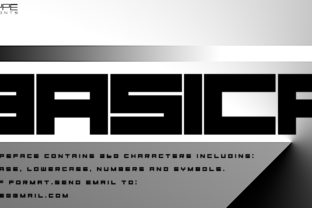
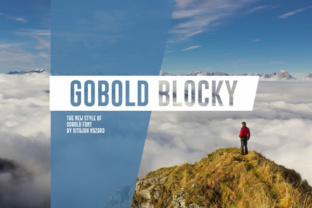
This effect becomes more pronounced at larger display sizes. In headlines, banners, or poster titles, Gobold Blocky transforms a phrase into a dense, almost architectural unit. The preview images available for the typeface demonstrate a range of possible block configurations: tight stacking, staggered alignments, and even multi-line compositions where each line snaps into a uniform width. The font does not force you into a single arrangement—it gives you the raw material to build these blocks yourself.
Technically, it is an open-source or freely licensed font in many distributions, though commercial use may require a license depending on the foundry. The file is a standard TrueType or OpenType font, installable on both macOS and Windows, and works with any design application that supports OpenType features. There is no special software needed; the "blocky" effect comes from the glyph design itself, not from hidden scripts or plugins.
Key Characteristics That Define Its Usefulness
Understanding the practical value of Gobold Blocky starts with its visual properties. The font is all-caps by design, with no lowercase letters in the standard version. Every character is uppercase, which reinforces the blocky, uniform aesthetic. The strokes are thick, the corners are rounded slightly (but not enough to lose the geometric feel), and the x-height is effectively the full cap height.
Several characteristics stand out:
- Uniform stroke width: There is minimal contrast between thick and thin strokes. This gives the typeface a consistent, heavy appearance that reads well at large sizes and remains legible even when the block effect is pushed to extremes.
- Tight letter spacing: The default kerning pairs are set so that letters sit very close to one another. In many cases, adjacent characters almost touch, reinforcing the monolithic block look.
- Limited character set: Gobold Blocky typically includes basic Latin letters, numbers, and common punctuation. Extended language support is not its strength, and designers working with accented characters may need to test beforehand.
- Single weight: Most versions offer a single bold weight. There are no light, italic, or condensed variants in the core release. This limits the typeface's use as a full family system.
These characteristics make Gobold Blocky a specialized display font rather than a workhorse for body text. That is not a weakness—it simply clarifies where the font belongs.
Strengths and Real-World Performance
When used appropriately, Gobold Blocky performs reliably. The font renders cleanly on screen and in print, provided the output resolution is moderate to high. At sizes below 24 points, the blockiness can become difficult to read because the individual letters lose their distinct shapes. At 36 points and above, the typeface starts to show its intended character: each word becomes a dense, rectangular glyph cluster that draws attention.
In real-world projects, I have seen Gobold Blocky used effectively in:
- Event posters: The solid blocks of text create a bold, modern feel that works well for music festivals, exhibitions, and product launches.
- Social media graphics: Short captions or headlines set in Gobold Blocky stand out in feeds where most text is rendered in thin, delicate fonts.
- Brand wordmarks: For brands that want a playful but substantial logotype, the blocky construction gives a sense of stability without feeling stiff.
- YouTube thumbnails and video covers: The high contrast and compact letterforms remain readable at small thumbnail sizes, which is a practical advantage.
- Physical signage and stickers: Because the letters are thick and bold, the font works well in cut vinyl or screen-printed applications where thin strokes might break.
Performance across operating systems is consistent. The font does not rely on advanced OpenType features, so it renders the same way in Adobe Illustrator, Photoshop, Figma, Canva, and even basic word processors like Word or Google Docs. This cross-platform reliability is a genuine strength for teams that share files.
Quality, Flexibility, and Long-Term Value
Assessing the long-term value of any typeface requires looking beyond the initial impression. Gobold Blocky is not a font you will use for every project. Its application range is narrow. However, within that niche, it offers solid quality. The glyph outlines are clean, the curves are well-formed, and the overall construction feels intentional. There are no orphaned nodes or uneven stroke widths that betray amateur design.
Flexibility is limited but honest. You cannot turn Gobold Blocky into a light text face or a script. What you see is what you get. That honesty is valuable because it prevents you from forcing the font into roles it cannot fill. A designer who understands the typeface's constraints will use it sparingly and effectively.
For long-term value, I recommend treating Gobold Blocky as part of a larger typographic toolkit. Pair it with a clean sans-serif like Open Sans, Inter, or Roboto for body text, and use Gobold Blocky exclusively for short headlines or accent blocks. This pairing preserves readability while letting the blocky font shine in its natural habitat. The typeface ages well stylistically because geometric slab faces have a cyclical popularity that prevents them from feeling permanently dated.
Audience Fit: Who Benefits Most
Not every creator gains equally from Gobold Blocky. The font is best suited for designers and content creators whose work involves short, bold, and playful typographic statements. Specifically:
- Small business owners who design their own promotional materials can use Gobold Blocky to create fast, attention-grabbing sale banners or social posts without needing advanced design skills.
- Social media marketers who produce daily graphics will find the font useful for quote cards, highlight covers, and channel headers where consistency matters.
- Bloggers and content publishers who want a distinctive visual identity for blog titles or section headers can rely on the font's consistent block shape to create a recognizable brand element.
- Event organizers printing posters or flyers on a budget can use Gobold Blocky to achieve a professional look without commissioning custom lettering.
- Educators and workshop facilitators creating handouts or instructional cards may appreciate the readability at medium to large sizes.
On the other hand, anyone working with long-form editorial content, multilingual projects, or formal corporate branding should probably pass on Gobold Blocky. The lack of lowercase letters and the limited character set are genuine barriers in those contexts.
Practical Recommendations and Limitations
If you decide to use Gobold Blocky, a few practical recommendations will help you get the best results.
- Test at your intended size early. The block effect changes dramatically between 24 pt and 72 pt. Always preview the font at the final output size before committing.
- Adjust tracking (letter spacing) manually. The default spacing is tight, but depending on your layout, you may want to open it slightly to improve legibility, especially for multi-word headlines.
- Avoid long strings of text. Keep your blocky text to three or four words maximum. Beyond that, the block effect collapses into an unreadable rectangle.
- Pair with ample white space. The density of Gobold Blocky requires breathing room around it. Do not crowd it with other heavy design elements.
- Use color sparingly. The font is strong enough on its own. A single bold accent color on a neutral background is usually the most effective treatment.
Limitations are worth noting honestly. Gobold Blocky does not perform well on low-resolution screens where small details blur into each other. It also struggles in text-heavy environments because its uniform weight creates monotony over longer passages. Additionally, some versions of the font lack kerning pairs for unusual glyph combinations, so you may need to manually adjust spacing between characters like W and A or T and Y.
Is Gobold Blocky Right for You?
The decision to use Gobold Blocky depends entirely on the nature of your project. If you need a display typeface that turns short phrases into solid, memorable visual blocks, this font delivers exactly what it promises. It is not a versatile workhorse, and it does not pretend to be. Its value lies in its specificity: a playful, geometric, all-caps font that creates instant structure out of text.
For designers and creators who work regularly with posters, social graphics, bumper stickers, badges, or any format where typography needs to function as a shape, Gobold Blocky deserves a place in your font library. Use it intentionally, pair it wisely, and it will serve you well across many projects. Approach it as a specialized tool rather than a general-purpose solution, and you will find that its particular kind of playfulness becomes a dependable asset in your creative workflow.