Venture: A Playful All Caps Sans Serif Typeface for Modern Design
Typography choices often define the tone of a project before a single word is read. When you need a typeface that balances personality with legibility, the options can feel either too safe or too loud. Venture enters that space as a playful all caps sans serif typeface designed for designers and communicators who want impact without sacrificing clarity. Understanding what Venture offers, where it excels, and where it may fall short helps you decide if it fits your next project.
What Venture Is and What Makes It Distinct
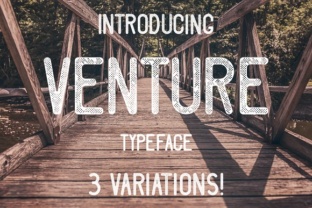
Venture is an all caps sans serif typeface that leans into a playful, energetic character. Unlike many sans serif families that aim for neutrality, Venture embraces a more expressive voice. The letterforms are bold and confident, with proportions that feel deliberate rather than rigid. The all caps format means every character sits at the same height, creating a uniform block of text that commands attention.
What sets Venture apart from many display typefaces is its range. The font comes in three distinct variations, which the designer intended for mixing and matching. This built-in flexibility allows you to create contrast within a single type family. You might use one variation for headlines, another for subheadings, and a third for accent text or pull quotes. The ability to layer variations keeps a layout cohesive while introducing visual interest.
Another distinguishing feature is the balance between playfulness and structure. Venture does not rely on extreme letterforms or decorative quirks. Instead, it finds personality in proportions, spacing, and the subtle details within each variation. The result is a typeface that feels approachable without being childish, and bold without being aggressive. This makes it suitable for projects where you want warmth and energy but still need to communicate clearly.
Comparing Venture with Other Typeface Categories
When evaluating Venture, it helps to consider how it compares with broader typeface categories. Understanding these differences clarifies when Venture is the stronger choice and when another approach may serve you better.
Venture vs. Traditional Sans Serif Families
Traditional sans serif typefaces like Helvetica, Arial, or Open Sans are designed for maximum readability across long passages of text. They are neutral, versatile, and unobtrusive. Venture takes a different path. Its all caps format and playful character mean it is not intended for extended body text. Reading long paragraphs in all caps becomes tiring, and the personality of Venture may distract from the message in text-heavy contexts.
If your project is text-rich, a standard sans serif with upper and lowercase characters will serve you better. However, if you are designing headlines, posters, branding elements, or short-form content where impact matters more than extended readability, Venture offers a level of character that neutral sans serifs cannot match.
Venture vs. Display Fonts
Display fonts are often highly decorative, designed for one-off use in large sizes. Venture sits between display fonts and text fonts. It has the personality of a display typeface but the discipline of a functional family. The three variations give it a flexibility that most display fonts lack. Many display typefaces offer a single style, limiting how you can use them across a project. Venture allows you to build a hierarchy using one family.
For projects that need variety without switching between different typefaces, Venture is a practical choice. However, if you want a highly ornamented or thematic display font for a specific purpose, Venture may feel too restrained. Its playfulness is broad and adaptable, not niche or themed.
Venture vs. All Caps Serif Typefaces
Serif all caps typefaces often convey tradition, authority, or formality. Venture, being a sans serif, feels more contemporary and approachable. If your project needs gravitas or a historical feel, a serif all caps may be more appropriate. Venture suits contexts where you want to feel modern, energetic, and open.
Strengths of Venture: When It Shines
Venture excels in several specific situations. Recognizing these helps you deploy it effectively.
- Headlines and Titles: The all caps format naturally draws the eye. Venture adds personality that makes headlines memorable. A title set in Venture feels distinct without being gimmicky.
- Branding and Logos: Many brands need a typeface that expresses energy and approachability. Venture works well for businesses in creative, lifestyle, or modern sectors. Its three variations can differentiate sub-brands or product lines within a unified visual system.
- Posters, Flyers, and Event Materials: Print pieces that need to grab attention in seconds benefit from Venture. The bold letterforms remain legible at a distance, and the playful tone communicates a sense of occasion.
- Mix and Match Layouts: The three variations are designed to complement each other. Using them together creates rhythm and contrast without the risk of mismatched typefaces. For example, you might use Variation A for main headings, Variation B for secondary headlines, and Variation C for callout phrases. The result feels intentional and cohesive.
- Short-Form Digital Content: Social media graphics, email headers, and landing page hero sections benefit from Venture. The typeface works well at large sizes on screens and maintains clarity and impact.
Tradeoffs and Limitations: When Venture May Not Be the Right Fit
No typeface works for every context. Venture has limitations worth considering before you commit to it.
- Extended Body Text: Venture is not suitable for long-form reading. All caps typefaces reduce readability by removing the ascenders and descenders that help the eye recognize word shapes. Readers fatigue quickly. If you have paragraphs to set, choose a conventional text font and use Venture for headings.
- Formal or Professional Contexts: Venture reads as playful and energetic. For legal documents, corporate reports, academic papers, or medical communications, this tone may conflict with the desired seriousness. In such contexts, a neutral sans serif or a traditional serif is more appropriate.
- Limited Language Support: Some playful typefaces have limited character sets. Before choosing Venture for a multilingual project, verify that it includes the accents and glyphs you need. This is a practical check that avoids production delays.
- Overuse of Variations: While mixing variations is a strength, using all three without a clear system can create visual confusion. If you apply variations arbitrarily, the layout may feel disjointed. Plan your hierarchy before you start.
Decision Factors: How to Choose Venture
Choosing a typeface involves considering your audience, your medium, and your message. Use these questions to decide if Venture fits your project.
What is the tone of your project?
If your project requires warmth, energy, or a sense of play, Venture is a strong candidate. If the tone is serious, formal, or understated, look elsewhere. Venture works best when you want the typeface to contribute to the mood, not just convey information.
How will the type be used?
If you are designing a text-heavy document, Venture will not serve you well. But if your project relies on short, impactful text, Venture offers advantages. Consider the ratio of body text to display text. If the majority of your content is headlines and short blocks, Venture can carry the entire project. If you need long paragraphs, plan a pairing with a readble text font.
Do you need variety within a single family?
The three variations are a genuine advantage. If you want to create visual hierarchy without managing multiple typefaces, Venture simplifies your workflow. You get contrast without compatibility concerns. This is especially valuable when working with clients or teams who need consistency across files.
Who is your audience?
Venture appeals to audiences who respond to bold, modern design. Creative professionals, younger demographics, and consumers in lifestyle, entertainment, or technology markets may find Venture engaging. If your audience expects tradition or conservatism, a more conventional typeface may build trust more effectively.
Practical Examples: Venture in Action
Seeing how Venture works in real scenarios helps ground the decision.
- A Music Festival Poster: The headliner name set in Venture Variation A in large caps immediately conveys energy. Supporting acts are set in Variation B at a slightly smaller size. Venue details and dates use Variation C for contrast. The poster feels unified yet dynamic, and the playful tone matches the event atmosphere.
- A Brand Identity for a Creative Agency: The agency name in Venture Variation A becomes the primary logo lockup. Taglines use Variation B. Social media graphics alternate between variations depending on the content type. The brand feels consistent without being repetitive, and the three variations give the designer room to adapt.
- A Mobile App Onboarding Screen: Short instructions like "Swipe to Start" or "Set Your Preferences" appear in Venture at large sizes. Users respond to the bold, clear text. The playful character reduces the formality of the setup process, making it feel more inviting.
How to Make the Most of Venture
If you decide Venture fits your project, follow a few strategies to use it effectively.
- Establish a clear hierarchy: Decide which variation represents the primary, secondary, and tertiary levels. Stick to this system throughout your project.
- Pair with a neutral text font: For any body text, choose a simple sans serif or serif that does not compete with Venture. Keep the text font minimal to let Venture lead the visual tone.
- Use white space generously: All caps typefaces need room to breathe. Avoid tight kerning or crowded layouts. Generous spacing around letters and between lines improves readability and preserves the playful feel.
- Test at different sizes: Venture may perform differently at small sizes versus large. Test your variations in the actual contexts where they will appear before finalizing your design.
- Stick to short phrases: Venture works best for words and short phrases. Avoid long sentences. If you need to convey more information, break it into shorter lines or switch to a conventional text font for readability.
When to Look Beyond Venture
No typeface is universal. Venture is a strong choice for specific use cases, but there are situations where other options will serve you better.
- If your project requires extensive body text, choose a typeface designed for reading comfort.
- If your brand needs a conservative or authoritative voice, a serif or neutral sans serif is more appropriate.
- If you need a highly decorative or thematic typeface for a specific aesthetic, Venture may feel too general.
- If your audience includes older readers or those with visual impairments, the all caps format may reduce accessibility. Consider a mixed-case typeface for better legibility.
In those cases, Venture can still play a role as a display accent, but it should not carry the full typographic load.
Final Considerations
Venture occupies a valuable niche in the typeface landscape. It is playful without being frivolous, bold without being harsh, and structured without being boring. The three variations offer practical flexibility that few display-oriented typefaces provide. For designers and communicators who need a typeface that contributes personality and energy, Venture is worth serious consideration.
At the same time, knowing when not to use Venture is equally important. The all caps format imposes readability constraints, and the playful tone may not align with every brand or message. By matching the typeface to the context, the audience, and the medium, you make a deliberate choice that strengthens your work rather than complicating it.
When you need a sans serif that stands out, works in multiple roles, and feels genuinely playful, Venture offers a practical and creative solution. Let the project guide your choice, and use Venture where its strengths align with your goals.