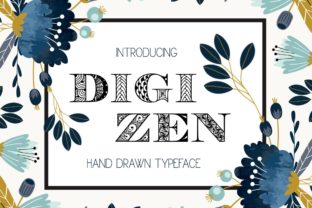
The Rise of Hand-Drawn Expression: Why Digizen Is Redefining Digital Design
In an era where digital interfaces risk becoming homogenized, the search for authentic, human-centered design has never been more urgent. Digizen — a hand-drawn decorative font created by Hungarian type designer Eva Barabasne Olasz — arrives at a moment when professionals across creative, business, and marketing fields are re-evaluating what visual communication truly means. Far from being just another decorative typeface, Digizen embodies a broader cultural shift: the return of the hand in a screen-dominated world.
This article explores what Digizen is, why it is gaining attention among designers, entrepreneurs, and marketers, and how it fits into larger trends reshaping industries from branding to content creation. Whether you are a freelancer looking to differentiate your portfolio or a marketing lead seeking more genuine consumer connections, understanding Digizen’s role offers practical insight into where design is headed.
What Is Digizen? A Hand-Drawn Font with a Digital Purpose
At its core, Digizen is a hand-drawn decorative font that carries the unmistakable mark of human craft. Created by Eva Barabasne Olasz, each character is sketched by hand before being digitized, preserving the subtle irregularities, varied stroke widths, and organic flow that mechanical fonts cannot replicate. The name itself — a blend of digital and citizen — signals its intended role: a typeface for a world where digital and human experiences are increasingly intertwined.
Unlike many decorative fonts that prioritize ornament over readability, Digizen maintains legibility while offering personality. It works across headlines, logos, short-form copy, packaging, and social media graphics. Its hand-drawn quality makes it particularly effective for brands and creators who want to communicate warmth, approachability, and authenticity without sacrificing professionalism.
Eva Barabasne Olasz designed Digizen with a clear philosophy: technology should amplify human expression, not replace it. This principle resonates strongly with today’s audience, who are growing weary of sterile, template-driven design.
The Shift Toward Human-Centric Design: Why Digizen Matters Now
For the past decade, the design industry has been dominated by clean sans-serifs, geometric precision, and minimalism. While these styles remain useful, a counter-movement is gaining momentum — one that values imperfection, tactility, and the trace of the human hand. This is where Digizen finds its natural home.
Several converging trends explain this shift:
- The authenticity economy. Consumers increasingly favor brands that feel genuine. A 2023 study by Stackla found that 88% of consumers say authenticity is a key factor in deciding which brands to support. Hand-drawn typography like Digizen signals that a brand has invested in unique, human-crafted assets rather than relying on stock templates.
- Visual fatigue from sameness. As more businesses adopt similar design systems (Helvetica, Inter, Roboto), audiences develop visual fatigue. Digizen offers a distinctive alternative that helps content stand out in crowded feeds, emails, and storefronts.
- The rise of the creator economy. Freelancers, solopreneurs, and content creators need to build strong visual identities on limited budgets. A distinctive font like Digizen can become a cornerstone of that identity, conveying personality without requiring a full rebrand.
These changes are not speculative — they are observable in how leading brands are evolving their visual language. Companies from small artisan studios to global lifestyle brands are incorporating hand-drawn elements into their packaging, websites, and advertising. Digizen provides a ready-made, high-quality tool for this purpose.
Why Designers and Brands Are Paying Attention to Digizen
Professionals across disciplines are taking notice of Digizen for reasons that go beyond aesthetics. The font addresses specific, practical needs that have emerged as the digital landscape matures.
1. Differentiation in a Saturated Market
For entrepreneurs and marketers, standing out is no longer optional. With thousands of brands competing for attention on social media, email, and e-commerce, visual distinctiveness directly impacts engagement. Digizen’s hand-drawn character catches the eye precisely because it does not look like every other font. When used in headlines or logo lockups, it creates an immediate sense of originality.
Consider a small-batch food company launching a new product line. Using Digizen on packaging communicates artisanal care before the customer even reads the ingredients. The font becomes a shorthand for quality and thoughtfulness.
2. Emotional Connection Through Imperfection
Research in cognitive science suggests that humans respond positively to stimuli that feel organic and imperfect. Perfectly geometric forms can feel cold or distant, while hand-drawn shapes trigger feelings of warmth, familiarity, and trust. Digizen leverages this by maintaining subtle variations in letterforms — a slight wobble here, a varied stroke weight there — that mimic actual handwriting.
For freelancers and creators who rely on personal branding, this emotional resonance is invaluable. A portfolio site or social media presence that uses Digizen signals approachability and a human touch, which can be a decisive factor for clients choosing between you and a competitor.
3. Versatility Without Complexity
Many decorative fonts are difficult to implement across different media. They may lack multiple weights, have poor kerning, or fail at small sizes. Digizen is designed with real-world use in mind. It works at display sizes for maximum impact and retains legibility when scaled down for body text or captions. This versatility means that a designer can use it across a website, product packaging, and social media without needing to switch typefaces, ensuring visual consistency.
Practical Applications of Digizen in Modern Workflows
Understanding where and how to use Digizen is key to getting value from it. Below are practical applications organized by use case.
Branding and Identity
For startups and established businesses alike, Digizen can serve as a primary logo font or as an accent typeface paired with a neutral sans-serif. Its hand-drawn quality is particularly effective for:
- Creative studios (design, illustration, photography)
- Lifestyle and wellness brands (yoga, skincare, organic food)
- Children’s products and educational platforms
- Event branding (workshops, festivals, pop-ups)
Content Creation and Social Media
Marketers and content creators can use Digizen in Instagram stories, YouTube thumbnails, quote cards, and email headers. Its distinctive look helps create a cohesive visual identity across platforms. Because it is a decorative font, it works best in short, impactful phrases — a single word or a brief statement.
Example: A career coach posting on LinkedIn could use Digizen for the word “Authenticity” in a graphic, paired with a clean sans-serif for the supporting text. The contrast draws attention while maintaining professionalism.
Packaging and Print
Digizen’s hand-drawn quality translates beautifully to physical materials. Product labels, hang tags, business cards, and stationery benefit from the tactile impression that the font conveys. For small-batch products, Digizen can help communicate the handmade ethos of the brand.
Web and UI Design
While Digizen is best suited for headings and hero sections rather than body text, it can add personality to websites when used intentionally. A landing page for a creative agency might use Digizen in the main headline, with a clean sans-serif for navigation and body copy. This hierarchical approach ensures readability while preserving visual interest.
The Cultural and Market Context: Authenticity as Currency
The growing interest in fonts like Digizen is part of a larger cultural movement toward authenticity as a market currency. As artificial intelligence generates increasingly convincing text, images, and even voices, the value of genuine human creation rises. People want to know that a real person made something — that there is a hand, an eye, and a story behind the work.
This is not a niche sentiment. It is reflected in consumer behavior across generations. Millennials and Gen Z, in particular, prioritize brands that feel honest and relatable. They are more likely to trust a brand that shows its process, shares its imperfections, and communicates in a human voice. Typography is a subtle but powerful part of that communication.
Eva Barabasne Olasz’s creation of Digizen fits into this narrative because it is explicitly hand-drawn. Each letter carries the signature of its maker. For businesses and creators who adopt it, that authenticity becomes part of their own story.
How Digizen Aligns with Changing Creator and Consumer Expectations
The expectations of both creators and consumers have shifted significantly in the past few years. Several key changes make Digizen particularly relevant:
- Expectation of uniqueness. Audiences no longer respond to generic visuals. They expect brands and creators to have a distinct point of view. Digizen provides a tool for expressing that individuality.
- Demand for emotional resonance. People want to feel something when they encounter a brand. Hand-drawn typography evokes emotion in a way that sterile fonts cannot.
- Need for efficient differentiation. Small teams and solo creators need high-impact assets that do not require hours of custom illustration. A font like Digizen delivers instant personality with minimal effort.
- Preference for sustainable design choices. Using a versatile, well-crafted font reduces the need for repeated design iterations and asset creation, aligning with more efficient workflows.
For marketers, these shifts mean rethinking how typography supports campaign goals. A font is not just a way to display text — it is a strategic asset that influences perception, engagement, and recall. Digizen, with its hand-drawn character, offers a way to build that strategy around authenticity from the ground up.
Observations from the Field
Early adopters of Digizen report several consistent outcomes:
- Higher engagement on social media: Posts featuring Digizen in headlines or quote cards often see increased shares and comments, particularly when the subject matter involves creativity, personal growth, or lifestyle.
- Improved brand recall: Clients and customers frequently remember brands that use distinctive typography. Digizen’s hand-drawn quality makes it memorable.
- Stronger alignment with brand values: Brands that position themselves as human-centered, artisanal, or design-forward find that Digizen reinforces their messaging without needing to explain it.
These observations are not anecdotal — they reflect broader trends in visual communication. As the digital space becomes more crowded, the tools that help us feel connected to other humans will continue to gain traction.
Conclusion: Digizen as a Signal of What’s Next
Digizen is more than a hand-drawn decorative font created by Eva Barabasne Olasz. It is a response to the cultural and commercial demand for authenticity, warmth, and human connection in a digital age. For professionals across creative, marketing, and entrepreneurial fields, it represents a practical way to differentiate work, build emotional resonance with audiences, and align design choices with the values that matter today.
The font’s growing popularity is not a passing trend — it is part of a lasting shift toward valuing the handmade in a world of mass production. Whether you are a designer looking for a signature style, a marketer seeking higher engagement, or an entrepreneur building a brand from scratch, Digizen offers a tool that is both functional and meaningful.
In the end, the most effective design is not the most polished — it is the most human. Digizen reminds us that sometimes, the best way forward is to keep a little of the hand in the digital.