Espacio Cuadrado: A Thoughtful Sans Serif for Modern Communication
The typeface you choose says as much about your message as the words themselves. In a world flooded with digital noise, a well-drawn font can cut through clutter, establish trust, and give your content a voice that lingers. That’s where Espacio Cuadrado enters the conversation. Designed by the skilled letterform artist Jaime Rangel Castro, this sans serif is not just another geometric face—it’s a deliberate tool for clarity, warmth, and understated personality.
Whether you’re building a brand, laying out a publication, or designing an interface, understanding what Espacio Cuadrado offers—and where its limits lie—can help you decide if it’s the right match for your project. Let’s explore its origins, its unique character, and the practical scenarios where it truly delivers.
What Defines Espacio Cuadrado?
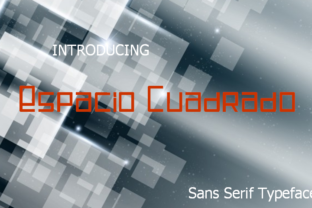
At first glance, Espacio Cuadrado belongs to the large family of geometric sans serifs—think clean circles, straight stems, and uniform stroke weight. But Rangel Castro’s creation avoids the cold, mechanical feel that plagues many fonts in that genre. Instead, it introduces subtle human touches: slightly softened corners, careful optical adjustments in curves, and proportions that feel natural rather than mathematically rigid.
Key characteristics include:
- Geometric foundation with organic refinements – shapes that feel precise yet approachable.
- Excellent legibility even at small sizes – thanks to open apertures and generous spacing.
- A balanced x-height that works across print and screen.
- Moderate contrast – enough to give rhythm without distracting.
- No forced quirks – the design stays purposeful and consistent.
What truly sets it apart is the philosophy behind it. Espacio Cuadrado was crafted to serve both body text and display settings, a dual role that few geometric typefaces manage well. The spacing, kerning, and letterfit have been honed to keep reading comfortable in paragraphs while retaining visual interest in headlines.
The Design Principles Behind Espacio Cuadrado
Jaime Rangel Castro approached Espacio Cuadrado with a clear brief: create a sans serif that feels modern without chasing trends, and that can adapt to different media without losing its core identity. The result is a typeface that respects classic typographic rules while embracing contemporary needs.
One of the most striking aspects is how the letters relate to one another. The aperture in the lowercase “a” and “e” is generous, making words instantly recognizable even on low-resolution screens. The counters (the enclosed spaces inside letters like “o” and “p”) are large and open, preventing them from filling in at small sizes. Terminal shapes are slightly flared, giving a gentle rhythm that guides the eye naturally along a line.
Rangel Castro also paid close attention to the way Espacio Cuadrado performs in multilingual settings. Diacritical marks are carefully placed, and the character set covers a wide range of Latin-based languages—a crucial detail for global brands or publishers working across markets.
Where Espacio Cuadrado Shines
The versatility of Espacio Cuadrado becomes clear when you see it in action across different contexts. Here are several real-world scenarios where it excels:
Brand Identity & Logo Design
Because Espacio Cuadrado balances warmth with precision, it works beautifully for logos that need to convey professionalism without feeling corporate. A tech startup, a design studio, or a consulting firm might use the regular weight for the wordmark and the light weight for taglines—the consistency across weights keeps the system cohesive.
Editorial & Long‑Form Content
Book designers and magazine art directors often struggle to find a geometric sans that doesn’t tire the reader. With its well-judged spacing and fluid rhythm, Espacio Cuadrado holds up well in multi‑page articles. Pair it with a serif for body copy and use the sans for pull quotes, subheads, and captions—the contrast is effective yet harmonious.
Digital Interfaces & Mobile Apps
Screen rendering benefits from Espacio Cuadrado’s open forms. Whether it’s the navigation menus on a banking app or the product descriptions in an e‑commerce site, the font remains legible on a 6‑inch display. The consistent stroke width also makes it a strong candidate for responsive layouts that adapt from desktop to watch.
Signage & Wayfinding
The geometric clarity of Espacio Cuadrado translates well to environmental design. From office directories to museum labels, its simple forms read quickly from a distance. The moderate weight range (light, regular, bold) provides enough hierarchy without needing additional styles.
Who Benefits Most from Espacio Cuadrado?
Espacio Cuadrado is not a niche typeface—it’s designed for a wide audience. Still, certain groups will find it especially valuable:
- Graphic designers and art directors looking for a reliable sans that won’t clash with other visual elements.
- Business owners building a brand from scratch—the font’s neutral-yet-warm character helps establish trust.
- Content creators and bloggers who want their articles to look polished without spending hours on typography.
- UX/UI professionals who need a typeface that performs cross‑platform and cross‑device.
- Students and educators in design fields who can study Rangel Castro’s letter construction as a learning example.
For online users—the people who will ultimately read the text—Espacio Cuadrado offers a friction‑free reading experience. When a font is well‑spaced and confidently drawn, readers unconsciously absorb the content more easily. It’s a subtle benefit, but one that builds over time.
Strengths and Considerations
Every typeface has trade‑offs. Being honest about them helps you avoid disappointment.
Strengths
- Versatility. Works in print and digital, large and small, serious and creative contexts.
- Legibility. Open apertures and generous spacing reduce eye strain in long texts.
- Modern but timeless. Doesn’t look tied to a specific design trend; will age gracefully.
- Well‑behaved spacing. Kerning is tight across common letter pairs—minimal manual adjustment needed.
- Multilingual support. Covers a broad range of Western European and Central European languages.
Considerations & Limitations
- Weight range. Espacio Cuadrado may not offer as many weights as foundries like Frere‑Jones or TypeTogether. Depending on the version, you might have only four or five weights (Light, Regular, Medium, Bold, perhaps an Italic). For projects that require a large typographic palette (e.g., extensive data tables or complex editorial hierarchies), this could be a constraint.
- Texture. Its geometric origin means that in very small sizes (below 10 px on screen), the letterforms can feel slightly uniform. Pairing it with a more textured serif for body text often solves this.
- Personality ceiling. Because it aims for broad applicability, Espacio Cuadrado does not carry a strong, idiosyncratic voice. If your project needs a loud, expressive typeface (say, for a music festival poster), you might prefer something more theatrical.
- Innovation curve. While well‑crafted, Espacio Cuadrado does not introduce radical new shapes. It follows established sans‑serif conventions—a deliberate choice that prioritizes reliability over novelty.
Evaluating Espacio Cuadrado for Your Next Project
Choosing the right typeface is a process of matching. Use these questions as a checklist when considering Espacio Cuadrado:
- What tone do I need? If neutral, approachable, and professional describes your brand or content, you’re on solid ground.
- How much typographic variety do I need? If you need many cuts (thin, extra‑light, black, condensed, etc.), you may need to supplement Espacio Cuadrado with another family.
- What media will the typeface live in? For responsive web and mobile, test it at actual pixel sizes. For print, request a printed specimen to see ink spread.
- Does it complement existing type choices? Pair it with a warm serif like Crimson Text or a geometric slab for contrast. Avoid pairing with another geometric sans that has similar proportions—the result often feels flat.
- Is the licensing aligned with my use? Ensure you have the right license for web, app, or commercial print. Espacio Cuadrado is often available through independent foundries; check the EULA before purchase.
A practical tip: Download the free‑trial version or use foundry preview tools to set a paragraph of your own text at different sizes. Pay attention to the rhythm—how the white spaces between letters and words interact. If you find the reading flow comfortable after five minutes, that’s a strong signal.
Final Thoughts
Espacio Cuadrado is a typeface designed with purpose, not hype. Jaime Rangel Castro has created a tool that respects the fundamentals of good typography while addressing the real‑world demands of modern communication. It may not grab attention with flashy alternates or dramatic swashes, but it will reliably serve the text—and the people reading it.
For designers and business owners who value clarity over spectacle, Espacio Cuadrado offers a solid foundation. Whether you’re crafting a corporate report, a mobile interface, or a book, this sans serif invites you to focus on the message. And in the end, isn’t that what type is all about?