Old Alpha: A Vintage Sans Serif Built for the Digital Age
The best typefaces are the ones that feel immediately familiar, yet quietly surprising. They don't scream for attention, but they anchor a layout with unmistakable character. That’s exactly the space Old Alpha occupies. It’s a sans serif font that looks like it could have been pulled from a mid-century print shop, but its construction and digital behavior belong squarely in the modern era. For designers and business owners tired of choosing between sterile contemporary fonts and dusty vintage ones, Old Alpha offers a compelling middle ground. It brings warmth, stability, and a touch of nostalgia, without sacrificing the clean readability we expect from modern typography. This isn't just a display font for vintage-revival projects; it's a genuinely versatile typeface for editorial design, web design, and building a cohesive brand identity.
The Visual Duality of Old Alpha
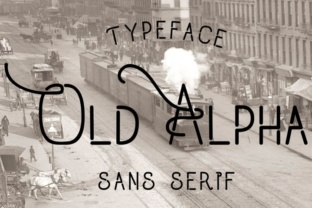
What sets Old Alpha apart from the thousands of other sans serif fonts available today is its dual personality. At first glance, it feels like a classic grotesque—solid, upright, and practical. But spending a little time with it reveals the modern updates that make it genuinely usable in 2024. The proportions are generous, giving it a steady, confident rhythm on the page. Many vintage revivals suffer from uneven spacing or awkward letterforms when sized up for screens. Old Alpha solves this with carefully adjusted kerning and clean vector curves that hold up across device resolutions. The terminals are friendly without being overly soft, and the overall structure avoids the clinical feel of standard geometric sans serifs.
Where you really see the "modern jacket" is in the details. Look at the lowercase 'a'—it retains a classic single-story form but with a wider, more open counter that improves legibility on digital displays. The numerals are beautifully drawn, fitting seamlessly into both tabular and proportional contexts. This level of polish is what separates a premium font from an average one. It respects the classic forms of vintage typography while applying the precision and utility expected of modern digital fonts. Whether you're examining the ampersand or the way the uppercase 'Q' curves, you can feel the typeface was built with intention.
Practical Applications: Where Old Alpha Works Best
A font with this specific blend of nostalgia and modernity needs the right environment to thrive. Here’s where I’ve seen it perform particularly well across creative, commercial, and personal projects:
Branding and Logo Design
If you're working with a client that wants to project heritage but needs to stay relevant—think craft breweries, coffee shops, boutique agencies, or editorial platforms—Old Alpha gives you instant personality. It reads as established and trustworthy, not dated. It works exceptionally well in wordmarks where the client wants a bespoke, artisanal feel without hiring a lettering artist. The consistent stroke width and slightly condensed proportions make it a natural fit for logo design where every letter needs to carry weight.
Editorial and Blog Layouts
For headers, pull quotes, and subheadings, Old Alpha creates a strong visual hierarchy. It pairs naturally with a clean serif font for body text, giving publications a distinct, curated feel. It works well in both print and long-form web articles. The bold weight has an authoritative presence that stops the scroll, while the lighter weights offer a subtle, uncluttered look for secondary information.
Packaging and Product Design
Vintage-inspired packaging design is a massive trend in food, beverage, and lifestyle products. Old Alpha fits right in on a label or box. Its readability at small sizes means it functions just as well on a fine print ingredient list as it does on the main product name. It brings a grounded, artisanal feel that tells customers the product has history, even if the brand launched last year.
Web, UI, and Social Media Graphics
Because it's designed with modern outlines and clear stroke contrast, Old Alpha renders crisply on screens. It works well for hero headlines, navigation elements, and short UI text where a bit of character is welcome. In social media graphics, Old Alpha stands out without being gimmicky. It brings a sense of craft to quotes, announcements, and promotional visuals. For web design, it balances personality with performance, loading cleanly across devices and browsers.
Personal and Craft Projects
For the hobbyists and small business owners reading this, Old Alpha is a fantastic creative font for creating your own invitations, t-shirt designs, posters, and merchandise. It gives personal projects a professional polish that standard system fonts can't match. Whether you're designing a gig poster or a birthday card, the typeface carries an inherent sense of design credibility.
How Old Alpha Influences Readability, Hierarchy, and Brand Perception
How does a font actually influence the way people perceive your brand? It's more direct than most people realize. Old Alpha’s high x-height and open counters make it exceptionally readable, even at smaller sizes. This is critical for maintaining clarity in body text or subheadings. For display use, its sturdy forms create a clear visual anchor. You can establish hierarchy simply by scaling between weights—light for secondary information, bold for primary messaging. This flexibility makes it a reliable choice for building a consistent design asset library.
In terms of brand perception, Old Alpha leans into honesty and craftsmanship. It lacks the aggressive efficiency of many modern sans serifs, and that’s a good thing for brands that want to feel personal. It says "we pay attention to how things look" without saying "we spent too much time on it." That balance is hard to achieve. Using a typeface with this level of intentional design consistency across your website, social media, and printed materials builds recognition. People might not know why your visuals feel cohesive, but they will feel it. Fonts like Old Alpha are foundational assets for building that kind of trust. It helps a brand appear both established and current, which is a sweet spot for many modern businesses.
Practical Guidance on Choosing and Testing Old Alpha
Before committing to a commercial font, it pays to do some homework. Here’s how I approach evaluating a typeface like Old Alpha for a specific project:
- Assess the Full Family. Make sure the available weights (Light, Regular, Bold, etc.) and italics match the scope of your project. A brand identity needs at least two distinct weights for hierarchy. Old Alpha typically offers a range that covers most editorial and branding needs. Check for small caps, ligatures, and tabular figures if your project involves data or tables.
- Test it in Context. Download the trial and set it up in your actual layout. Test it at 12px for legibility and at 72px for impact. Notice how it handles punctuation and numerals—those are often the first giveaways of a poorly drawn font. Pay special attention to how it renders in all-caps. The tracking and kerning should feel balanced without manual adjustment. A well-spaced all-caps heading is a hallmark of a polished typeface.
- Consider Font Pairings. Old Alpha pairs beautifully with a classic serif font like Crimson Text or a modern serif like Playfair Display. For a more subdued look, try it with a handwritten font or a simple, neutral script font for accent text. The goal is contrast. You want the vintage stability of Old Alpha to play against something more organic or delicate. Avoid pairing it with another highly stylized vintage font to prevent visual competition.
- Review the License. Always check the commercial license before launching. For web use, you’ll typically need a standard webfont license. For logos and branding assets, ensure the EULA covers reproduction in merchandise, packaging, and promotional materials. Old Alpha, being a commercial font, usually offers clear tiered licensing. Understanding this from the start prevents headaches down the road.
- Gather Feedback. Show your design to someone unfamiliar with the project. Ask them what emotions the font evokes. If they say "reliable," "classic," or "friendly," you're on the right track. If they say "old," outdated, or "clunky," you might need to reconsider the context or weight. Trust your gut, but also trust the reaction of your audience.
The best design assets are the ones that do the heavy lifting quietly. Old Alpha feels like it belongs to a lineage of typography that values craft and clarity. It doesn’t try to reinvent the wheel, but it polishes the wheel until it runs smoothly on modern roads. If you're building a brand, designing a publication, or crafting visuals for a campaign that needs to feel grounded but sharp, Old Alpha is a strong candidate. It respects the past without being trapped by it, and that’s a pretty useful trick for any designer or business owner trying to do the same. When you find a typeface that combines the soul of a classic display font with the technical execution of a modern typography tool, you hold onto it. Old Alpha is one of those finds.