Evaluating Royal Crescent: A Display Sans for Sophisticated Typography
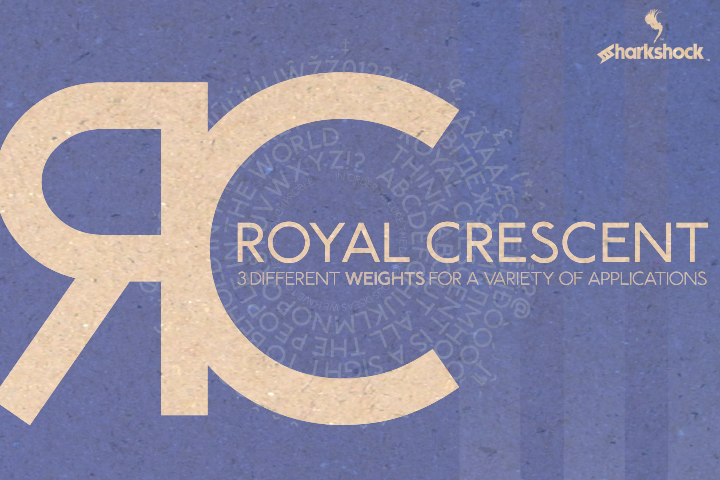
Royal Crescent is an all-caps display sans-serif typeface designed with elegance and simplicity as its guiding principles. Its uniform character width and clean, consistent strokes produce low contrast across all three available weights. Even at its heaviest iteration, the typeface avoids appearing overly bold, maintaining a refined restraint that distinguishes it from many display faces. The design includes slight variations between select uppercase and lowercase characters, allowing them to be used interchangeably in certain contexts. While titling was the primary use case during its development, Royal Crescent offers flexibility for a range of applications, including web headers, magazine layouts, and luxury branding materials. It supports Basic Extended Latin, punctuation, symbols, diacritics, Cyrillic, kerning, and fractions, making it suitable for multilingual projects.
What Royal Crescent Offers to Designers and Brands
Royal Crescent is best understood as a specialized tool rather than a general-purpose workhorse. Its all-caps nature and low-contrast structure make it particularly effective for headlines, logotypes, and other settings where each letterform must command attention without competing for it. The typeface’s consistent width throughout all characters contributes to a grid-like rhythm that can lend a sense of order and deliberate pacing to layouts.
The three weight variations—though none are especially bold—provide enough range to establish hierarchy within a small family. Designers working on projects that demand a cohesive system across different scales may find this useful, provided they do not require extreme contrast between weights. The subtle differences between certain upper and lowercase forms add a layer of typographic nuance: a lowercase character used in an all-caps setting can introduce a gentle shift in texture without breaking the overall uniformity.
From a technical standpoint, the inclusion of kerning ensures that letter pairs are spaced in a visually balanced way, which matters significantly in display settings where every character relationship is highly visible. The extended Latin and Cyrillic coverage broadens the typeface’s utility for international audiences, while the built-in fractions and diacritics reduce the need for manual adjustments or additional fonts.
Key Benefits and Practical Strengths
One of the primary advantages of Royal Crescent is its visual restraint. In a landscape where display typefaces often rely on ornamental flourishes or dramatic weight shifts, Royal Crescent achieves presence through consistency and proportion. This makes it a strong candidate for projects where the typography must feel intentional but not intrusive.
- Uniform character width creates predictable spacing that simplifies layout planning, especially for centered or symmetrical compositions.
- Low contrast across weights reduces the risk of uneven color in text blocks, helping maintain a balanced page even when different sizes or weights are used together.
- Interchangeable upper and lowercase forms offer a controlled way to introduce subtle variation without disrupting the overall monolinear aesthetic.
- Multilingual support with Cyrillic and diacritics allows the typeface to function across different markets without requiring a separate font.
- Kerning and fraction sets save time during production and improve the final typesetting quality.
These features are especially relevant for branding projects where the typeface will appear across print and digital touchpoints. A luxury logo rendered in Royal Crescent, for example, benefits from the typeface’s even color and lack of extreme contrast, which translates well to small-scale applications such as business cards, as well as larger formats like signage or packaging.
Tradeoffs and Limitations to Consider
While Royal Crescent has clear strengths, it also comes with limitations that may not suit every project. The most obvious constraint is its all-caps design. This typeface is not intended for extended body text or lowercase-heavy settings. Readers accustomed to mixed-case text may find continuous all-caps passages harder to read, particularly at smaller sizes or over long stretches. Even the characters that can be swapped between upper and lowercase do not fundamentally change the all-caps nature of the typeface.
The low contrast profile, while beneficial for uniformity, can also make the typeface feel flat in certain contexts. Projects that rely on dramatic typographic hierarchy—such as editorial spreads that pair bold headlines with delicate subheads—may find Royal Crescent’s weight range too narrow. The heaviest weight is not particularly bold, so the contrast between light and heavy versions is subtle rather than pronounced.
Another consideration is the typeface’s uniform width. This characteristic reinforces its grid-friendly quality, but it also means that naturally wide characters (such as M or W) occupy the same horizontal space as narrower ones (like I or l). This can create an appearance that feels compressed for some letters and expanded for others, depending on the context. Designers who prefer optically adjusted spacing may need to supplement with manual tracking adjustments.
Finally, while the typeface includes extended Latin and Cyrillic, it does not cover every script or diacritic combination. Projects requiring Greek, Arabic, or East Asian characters will need a complementary typeface for those portions of the text.
Where Royal Crescent Excels
Royal Crescent is a strong fit in scenarios where the typography needs to convey sophistication without drawing attention to itself. Luxury branding is an obvious use case, but the typeface also performs well in more utilitarian settings where clarity and consistency are paramount.
- Web headers and hero sections: The even spacing and clean strokes read clearly on screens, and the all-caps format can give navigation titles or section headers a distinctive, structured appearance.
- Magazine spreads and editorial design: When used for pull quotes, section openers, or title pages, Royal Crescent provides a calm, authoritative presence that complements both photographic and illustrative content.
- Logotypes and wordmarks: The uniform width and restrained weight make the typeface well suited for logos that need to remain legible at small sizes or on merchandise, while still appearing polished at large scale.
- Packaging and product labels: Especially for premium or minimalist brands, the typeface’s simplicity aligns with clean packaging aesthetics. The included fractions and symbols are useful for indicating sizes, ingredients, or measurements.
- Multilingual signage or documents: The Cyrillic and diacritic support reduces the need to switch fonts when working across languages, which helps maintain consistency in multilingual projects.
In each of these contexts, Royal Crescent’s design decisions—low contrast, uniform width, restrained weight—serve the project’s goals rather than competing with them. The typeface supports the message without becoming the message itself.
When Alternatives Might Be Worth Considering
There are situations where Royal Crescent may not be the optimal choice, and understanding these boundaries is essential for making an informed decision.
Projects requiring strong typographic hierarchy: If your layout depends on dramatic weight shifts between headlines, subheads, and body text, Royal Crescent’s three relatively close weights may not provide enough contrast. A typeface with a wider weight range or greater optical size variation would offer more flexibility.
Extended reading in mixed case: While Royal Crescent can be used for short expository text, it is not designed for long-form reading. Body text typefaces with lowercase forms, better readability at small sizes, and more generous spacing will serve readers better in articles, reports, or books.
Dynamic or playful branding: Brands that want their typography to feel energetic, informal, or highly distinctive may find Royal Crescent too static. The typeface’s uniformity and restraint can read as reserved or formal, which may not align with a brand personality that aims to be bold or unconventional.
Environments with very small text: At extremely small sizes—such as footnotes, disclaimers, or fine print—all-caps typefaces can become harder to read because the lack of ascenders and descenders reduces word shape recognition. A typeface designed specifically for small sizes, with more open counters and generous letter spacing, would perform better in these settings.
Projects requiring extensive character coverage: If your content includes Greek, Arabic, CJK, or other scripts not supported by Royal Crescent, you will need to pair it with another typeface. This is manageable but adds complexity to the design process.
Practical Insights for Decision-Making
When evaluating Royal Crescent for a specific project, consider the following factors to determine whether it aligns with your goals:
- Assess your typographic needs: List the specific uses the typeface will serve. If the primary role is titling, headers, or logos, Royal Crescent’s design is well aligned. If you need a typeface for body copy or mixed-case text, look elsewhere.
- Test at intended sizes: Because the typeface maintains uniform width and low contrast, its appearance at 12 points differs noticeably from its appearance at 72 points. Print out or screen-test samples at the sizes you will actually use, paying attention to how the spacing and weight feel.
- Pair with a complementary font: For most projects, Royal Crescent will work best as a display accent paired with a separate body text typeface. Consider how the two typefaces interact in terms of x-height, contrast, and overall tone.
- Evaluate the weight range: Determine whether the three available weights offer enough differentiation for your hierarchy. If you need a true light, regular, semibold, and bold, Royal Crescent may feel too narrow.
- Consider the brand context: If the brand’s visual identity relies on warmth, spontaneity, or high energy, Royal Crescent’s restrained elegance may feel misaligned. For brands that value precision, minimalism, or timelessness, it is a natural fit.
- Review language requirements: Confirm that the character set covers the languages and symbols your project requires. The Cyrillic and extended Latin support covers many European and Slavic languages, but not all.
Designers often find that the most successful use of Royal Crescent comes from embracing its constraints rather than trying to force it into roles it was not designed for. Used for its intended purpose—display titling, luxury branding, and structured editorial work—it delivers a consistent, polished result. Used in contexts that demand high contrast, small-size readability, or mixed-case fluency, it will likely fall short of expectations.
Making an informed choice about Royal Crescent means understanding both its strengths and its boundaries. For projects that align with its design philosophy, it offers a reliable, elegant tool that can elevate the typographic quality of the work. For projects that require different capabilities, pursuing an alternative will save time and produce better outcomes. Evaluate your specific needs, test the typeface in your environment, and let the practical requirements of the project guide your decision.