Hildegardis: The Medieval Cipher of Hildegard von Bingen
Most people know Hildegard von Bingen as a 12th-century abbess, mystic, composer, and theologian. Her music still plays on classical radio stations. Her writings fill volumes. But fewer people know that she also created the first recorded constructed language in European history—and an alphabet cipher to go with it. That cipher, now called Hildegardis, survives in the Riesencodex, a manuscript so large it weighs over 30 pounds. Inside that giant book, tucked among her visions and letters, you will find the Lingua Ignota and the unique glyphs of a cipher designed to obscure it. This article unpacks what Hildegardis is, why it matters across different fields, and how you—whether you are a historian, creative, linguist, or simply curious—might engage with it.
What Is Hildegardis?
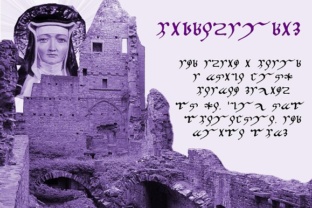
Hildegardis refers both to the cipher alphabet Hildegard von Bingen devised and to the constructed language it encoded. The Lingua Ignota (unknown language) contains around 1,000 words, each paired with a Latin gloss. The words are not derived from Latin or German—they appear to be entirely invented. To write this language, Hildegard created a set of 23 or 25 letterforms (sources vary slightly, though the Riesencodex shows 23 distinct glyphs, with modern reconstructions often rounding to 25 including variants). The script is an alphabetic cipher, meaning each glyph stands for a letter, but the shapes bear no obvious resemblance to Latin, Greek, or runic alphabets. They are graceful, flowing forms—some rounded, some angular—that look utterly unlike the Carolingian minuscule script used in most medieval manuscripts of her time.
What makes Hildegardis unusual is its purpose. Most medieval ciphers aimed to hide military, diplomatic, or heretical messages. Hildegard used hers to encode a language she invented for spiritual and perhaps artistic reasons. The cipher provided a written form for a private tongue. Whether she intended it for liturgical use, personal meditation, or as a kind of sacred script remains debated. What is certain is that the Riesencodex preserves both the language and the cipher, and modern scholars have digitized and transcribed the glyphs. The font used in current reconstructions—like the one in the Hildegardis typeface—copies those original forms directly from the manuscript, including what may be her actual signature in her own hand.
Who Cares About a 12th-Century Cipher?
At first glance, Hildegardis might seem like an obscure footnote. But several distinct audiences find value in it—for very different reasons.
Linguists and Language Enthusiasts
If you study constructed languages (conlangs), Hildegardis is a landmark. It predates all modern conlangs by centuries. It is older than Tolkien's Elvish, older than Klingon, older than Esperanto. For linguists, the Lingua Ignota offers a rare look at how a pre-modern mind thought about language invention. The vocabulary is structured: there are words for body parts, plants, tools, angels, and abstract concepts. About half the words are nouns, but there are also verbs, adjectives, and adverbs. This is not a random list—it has grammatical bones. For hobbyists who enjoy constructing languages today, studying Hildegardis shows that the impulse to create languages is not modern. It also provides a concrete historical example to cite when people ask, "Did anyone invent languages before Tolkien?" Yes. Hildegard did.
Historians and Medieval Scholars
For historians, Hildegardis is a window into the intellectual life of a 12th-century abbess. In an era when most women were excluded from formal education, Hildegard wrote theology, composed music, corresponded with popes and emperors, and invented a language. The cipher and the Lingua Ignota challenge assumptions about medieval women's literacy and creativity. They also raise questions about monastic culture: was this a private spiritual practice, a tool for secret communication among her nuns, or a form of intellectual play? The cipher's existence inside the Riesencodex—a compilation of her works prepared late in her life—suggests she considered it important enough to preserve alongside her visionary writings. For educators teaching medieval history, Hildegardis provides a concrete artifact that illustrates the intersection of faith, intellect, and creativity in the Middle Ages.
Cryptographers and Puzzle Solvers
If you enjoy ciphers, codes, and cryptograms, Hildegardis offers a historical puzzle that is both solvable and culturally rich. Because the cipher is alphabetic—each glyph maps to a letter in the Latin alphabet—it is not difficult to decode once you have the key. The Riesencodex includes Latin glosses for the Lingua Ignota words, effectively providing a bilingual dictionary. For hobbyists who enjoy creating or breaking ciphers, Hildegardis is a satisfying example of a simple substitution cipher with an unusual script. It is also a reminder that medieval cryptography existed outside of military and diplomatic spheres. If you run a puzzle hunt or design escape rooms, the Hildegardis font can add an authentic medieval flavor to a challenge.
Creative Professionals and Artists
Designers, illustrators, calligraphers, and typographers may find Hildegardis visually compelling. The glyphs are unlike any standard Western script. They have a rhythmic, almost musical quality—fitting for a composer-abbess. If you create fonts, book covers, fantasy maps, or ceremonial documents, the Hildegardis alphabet offers a distinctive set of letterforms that evoke mystery and antiquity without being clichéd. Unlike fictional fantasy scripts that are invented whole cloth, Hildegardis carries historical weight. Using it in a project adds depth: it is not a random random-looking code—it is a real cipher from a real person whose life is well documented. For tattoo artists, game designers, and illustrators, this cipher works equally well as a decorative element or as part of a narrative. The fact that the meanings of the Lingua Ignota words are partly known adds another layer: you can encode actual words in the cipher and know that they have semantic content rather than being purely ornamental.
Practical Examples Across Different Use Cases
How might you actually use Hildegardis in your own work or hobby? Here are a few scenarios tailored to different reader types.
- For a linguist or conlanger: You could analyze the phonology of the Lingua Ignota by comparing the cipher glyphs to the Latin glosses. Because each glyph maps to a Latin letter, you can reconstruct how Hildegard might have pronounced her words. For example, if a glyph consistently appears where Latin uses "a," you know that glyph represents a vowel sound. This kind of analysis is straightforward but reveals patterns in her invented vocabulary. You might also compare the grammar of Lingua Ignota to Latin to see where Hildegard followed or broke conventional rules.
- For an educator: You could use Hildegardis in a classroom activity about medieval history, language, or cryptography. Give students a short passage encoded in the Hildegardis cipher along with the key. Ask them to decode it. Then discuss why Hildegard might have created a secret alphabet. This works for middle school through undergraduate levels. It also connects to broader themes: women's history, the intersection of art and faith, and the human drive to create private systems of meaning.
- For a designer or artist: Consider using the Hildegardis glyphs as inspiration for a custom typeface or a series of ornamental letters. Because the original forms are irregular and hand-drawn, they have a warmth that digital fonts sometimes lack. You could trace them from the Riesencodex facsimiles and create your own digital or physical set. Or you could incorporate them into a calligraphy piece alongside Latin text, creating a visual contrast between the familiar Carolingian script and the alien glyphs of Hildegard's invention.
- For a game designer or writer: Use Hildegardis as an in-world script for a historical or fantasy setting. If your story involves a medieval abbey, an invented language, or a secret code, this cipher provides ready-made material. Because it is historically authentic, it does not feel anachronistic. And because the Lingua Ignota word list survives, you can actually assign meanings to the glyphs rather than just making them decorative.
- For a hobbyist or history enthusiast: You could learn to write your own name in Hildegardis glyphs, or encode a short phrase. Several online resources provide the cipher key and font files. The act of writing in a medieval constructed script is meditative—it forces you to slow down and think about letter shapes differently. It also connects you directly to a person who lived 900 years ago. That tactile link to the past is one of the most rewarding aspects of engaging with historical ciphers.
Is Hildegardis Right for Your Project or Interest?
Hildegardis may not suit everyone. If you are looking for a cipher that is mathematically complex or difficult to break, this one is not it. It is a simple substitution cipher—decoding it requires only the key. If your interest is in cryptanalysis or modern encryption, Hildegardis will feel elementary. Similarly, if you need a fictional script that is entirely invented and customizable, you might prefer to create your own rather than adapt an existing historical one. The glyph set is small (23–25 characters) and lacks punctuation, numbers, or lowercase variants in the original, though modern font versions often duplicate the glyphs as capitals for convenience. This means it works best for short texts, names, or phrases—not lengthy documents.
On the other hand, Hildegardis excels in contexts where historical authenticity, visual distinctiveness, and a story behind the script matter. It is ideal for:
- Historical reenactment or educational displays
- Fantasy or historical fiction that prizes genuine medieval artifacts
- Typography projects that need an unusual but real script
- Linguistic or conlang research that values historical precedent
- Any project where the fact that a 12th-century abbess invented the script adds meaningful context
For professionals and creators, the question is not "Is Hildegardis better than a modern cipher?" but rather "Does the authenticity and aesthetic of this specific script serve my goal?" If the answer is yes, then Hildegardis offers something that no fictional script can match: a direct link to a real person, a real manuscript, and a real moment in intellectual history.
Long-Term Usefulness and Learning Value
Hildegardis has staying power. Because the source material—the Riesencodex—survives and has been digitized, anyone with internet access can study the original glyphs. The font is available for download, and scholarly analysis of the Lingua Ignota continues. This means that engaging with Hildegardis now is not a dead end. As more scholars transcribe and interpret the vocabulary, the cipher becomes more usable. For linguists and historians, it is a living research subject. For hobbyists and creators, it is a resource that will not disappear or become obsolete. It also resists the kind of commercial commodification that can drain meaning from historical artifacts. No single company owns Hildegardis. It belongs to the public domain. That makes it a sustainable choice for educators, publishers, and independent creators who want to use something freely and cite it properly.
From a learning perspective, Hildegardis rewards different levels of engagement. At the surface level, you can memorize the glyphs and write your name. At a deeper level, you can study the vocabulary structure of the Lingua Ignota, compare it to medieval Latin glossaries, and consider the theological implications of Hildegard's linguistic choices. For a self-directed learner, this is a rich rabbit hole. For an educator, it offers multiple entry points: one student might be drawn to the art, another to the code, another to the historical context. You can teach the same cipher in a history class, a linguistics class, or a graphic design class, and each group will take away something different.
Final Thoughts on Hildegardis
Hildegard von Bingen left behind a remarkable body of work: theological visions, medical texts, musical compositions, and letters to the most powerful figures of her age. The Hildegardis cipher and the Lingua Ignota are a smaller piece of that legacy, but they are not trivial. They show a side of her that was playful, inventive, and deeply literate. They also remind us that encryption and constructed languages are not purely modern phenomena. People have been creating secret alphabets and invented tongues for centuries, for reasons that ranged from the spiritual to the practical to the artistic. If you choose to engage with Hildegardis—whether by decoding a phrase, designing a type treatment, or teaching a lesson—you are continuing a tradition that began in a German abbey nearly nine hundred years ago. And that is worth preserving.